

Key Takeaways
- The right floor coating depends on workshop traffic, moisture conditions, chemical exposure, and safety needs.
- Concrete preparation is just as important as the coating material.
- Epoxy, polyurea, polyaspartic, polished concrete, and paint have different strengths and limitations.
- Slip resistance, cure time, UV stability, and maintenance should be part of every decision.
- A detailed quote should explain repairs, preparation, coating layers, and warranty coverage.
A Rock Hill home garage often has to do more than hold vehicles. It may serve as a woodworking space, repair bay, storage room, hobby area, or weekend project headquarters. Choosing garage floor coatings in Rock Hill, SC, starts with understanding what the floor must handle every week, from hot tires and oil drips to rolling tool chests, wet shoes, and dropped hand tools. York County weather also matters. Summer heat, humidity, rainwater tracked in from driveways, and seasonal temperature changes can expose weaknesses in bare concrete. A well-chosen floor system can make cleanup easier, improve the appearance of the workshop, and create a more dependable surface for the way Rock Hill households actually use their garages.
Why a Garage Floor Coating Matters in Rock Hill
Bare concrete is porous, which means it can absorb oil, grease, cleaners, and moisture. In a busy workshop, grit can grind into the surface while heavy storage racks, jacks, and equipment create chips and scuffs. A coating does not fix a failing slab, but it can provide a cleaner, more durable wear layer when the concrete underneath is sound and properly prepared. For example, a homeowner who parks daily and rebuilds lawn equipment on weekends needs a different floor than someone who only stores boxes and bicycles. Consider tire heat, tool impact, chemical spills, drainage, and how frequently the garage door stays open to sunlight.
Assess the Space Before Selecting a System
Homeowners comparing garage floor coatings in Adger, SC, can use the same planning approach: ask, “What will this floor need to survive every week?” A realistic answer prevents appearance alone from driving the decision.
- Daily parking: Prioritize resistance to tire marks, water, road debris, and routine cleaning.
- Home workshop: Look for strong adhesion, chemical resistance, impact tolerance, and texture for traction.
- Storage-heavy garage: Focus on easy cleaning and protection from stains beneath shelving and equipment.
- Hobby room or gym: Consider comfort, finish appearance, noise, and slip resistance.
- Sunlit garage: Choose a UV-stable topcoat if direct sunlight reaches the floor.
Compare Common Garage Flooring Materials
Epoxy
Epoxy is known for a hard, attractive finish and solid resistance to many stains, chemicals, and vehicle traffic. It can be a practical choice when the slab is dry, and preparation is thorough. However, some epoxy products require a longer cure period, and basic versions may discolor with frequent sun exposure. Professional-grade systems also differ substantially from thin, consumer-oriented kits.
Polyurea and Polyaspartic
Polyurea and polyaspartic coatings are popular when a quick return to service is important. They can offer flexibility, abrasion resistance, and strong UV performance when the appropriate topcoat is used. Their fast cure times are useful for active Rock Hill households, but they leave less room for application errors. This is one reason these materials are commonly installed as part of a carefully planned multilayer system. When comparing resin choices, epoxy, polyurea, and polyaspartic systems should be evaluated in light of moisture conditions and the desired reopening time.
Polished Concrete, Paint, and Sealer
Polished concrete can be low maintenance when the existing slab is smooth, dry, and in good condition, although it may not provide the same level of chemical protection as a resin coating. Paint and basic sealers generally cost less upfront, but they may wear sooner in a workshop exposed to hot tires, heavy equipment, and frequent spills. Lower purchase cost does not always equal lower long-term cost.
Why Concrete Preparation Comes First
Most coating problems begin before the first layer is applied. Moisture moving through a slab, oil contamination, weak concrete, old paint, and inadequate profiling can all interfere with adhesion. Proper preparation may include:
- Inspecting for cracks, pits, spalling, dusting, and uneven areas.
- Checking for moisture concerns and drainage problems.
- Removing grease, tire residue, dirt, and failed previous coatings.
- Mechanically grinding the surface to create a suitable profile.
- Repairing appropriate cracks, chips, and damaged spots.
- Vacuuming dust thoroughly before the coating is applied.
Coating damp or contaminated concrete can lead to bubbling, peeling, or early wear, even when a high-quality product is used.
Balance Safety, Style, and Daily Use
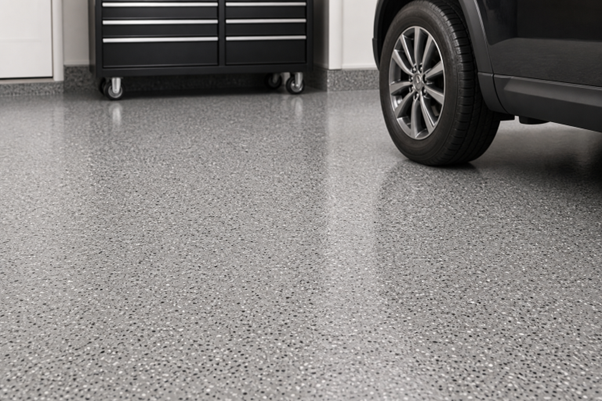
A glossy floor can brighten a workshop, especially when paired with good overhead lighting, but smooth surfaces may become slippery when wet. Decorative flakes and texture additives can improve traction while helping hide minor dust, marks, and scratches. Light blends can make a smaller Rock Hill garage feel brighter, while darker blends may better disguise tire marks. For additional inspiration, durable finishes for cars and workshops show how practical flooring choices can still complement a home’s design.
What Professional Installation Usually Includes
A complete installation typically follows a clear sequence: emptying the garage, protecting nearby surfaces, inspecting and repairing the slab, mechanically preparing the concrete, applying a base coat, broadcasting flakes or texture, if selected, removing loose material, and applying a protective top coat. Cure time depends on temperature, humidity, product chemistry, and the number of layers. Confirm when the surface can handle foot traffic and when it can safely support vehicles.
DIY Kit or Professional Installation?
A DIY kit may suit a lightly used garage with clean, dry, undamaged concrete and an owner who has time for careful preparation. Professional installation may be the better fit for a busy home workshop, existing oil stains, cracks, moisture concerns, or fast-curing materials. The lowest initial price can become expensive if the floor needs early repair or replacement.
Simple Maintenance for a Longer-Lasting Floor
- Sweep away grit regularly, especially near the garage entrance.
- Clean oil, fuel, and chemical spills promptly.
- Use mild cleaners that do not leave a slippery residue.
- Avoid dragging heavy metal equipment across the surface.
- Place protective pads under jacks, stands, shelves, and workbenches.
- Inspect each season for chips, peeling, and movement-related cracks.
Final Selection Checklist
Before choosing a garage floor coating in Rock Hill, determine how the garage is used, inspect the slab, consider moisture and sunlight exposure, compare materials, confirm slip resistance, and review the full scope of the installation. The best result is not necessarily the newest or flashiest product. It is the system that matches the concrete South Carolina conditions and the workload of the people using the space.
Conclusion
Choosing the right garage floor coating in Rock Hill starts with the way the space is actually used. Epoxy, polyurea, polyaspartic, polished concrete, paint, and sealers each offer varying levels of durability, maintenance requirements, moisture resistance, and protection. A successful installation also depends heavily on proper concrete preparation, including cleaning, repairs, moisture evaluation, and surface profiling. Homeowners should also consider slip resistance, sunlight exposure, cure time, chemical spills, and the weight of vehicles or workshop equipment. By comparing these factors and reviewing what a contractor includes in the quote, Rock Hill homeowners can select a flooring system that not only looks better but also provides a safer, cleaner, and more dependable surface for everyday garage activities.
