

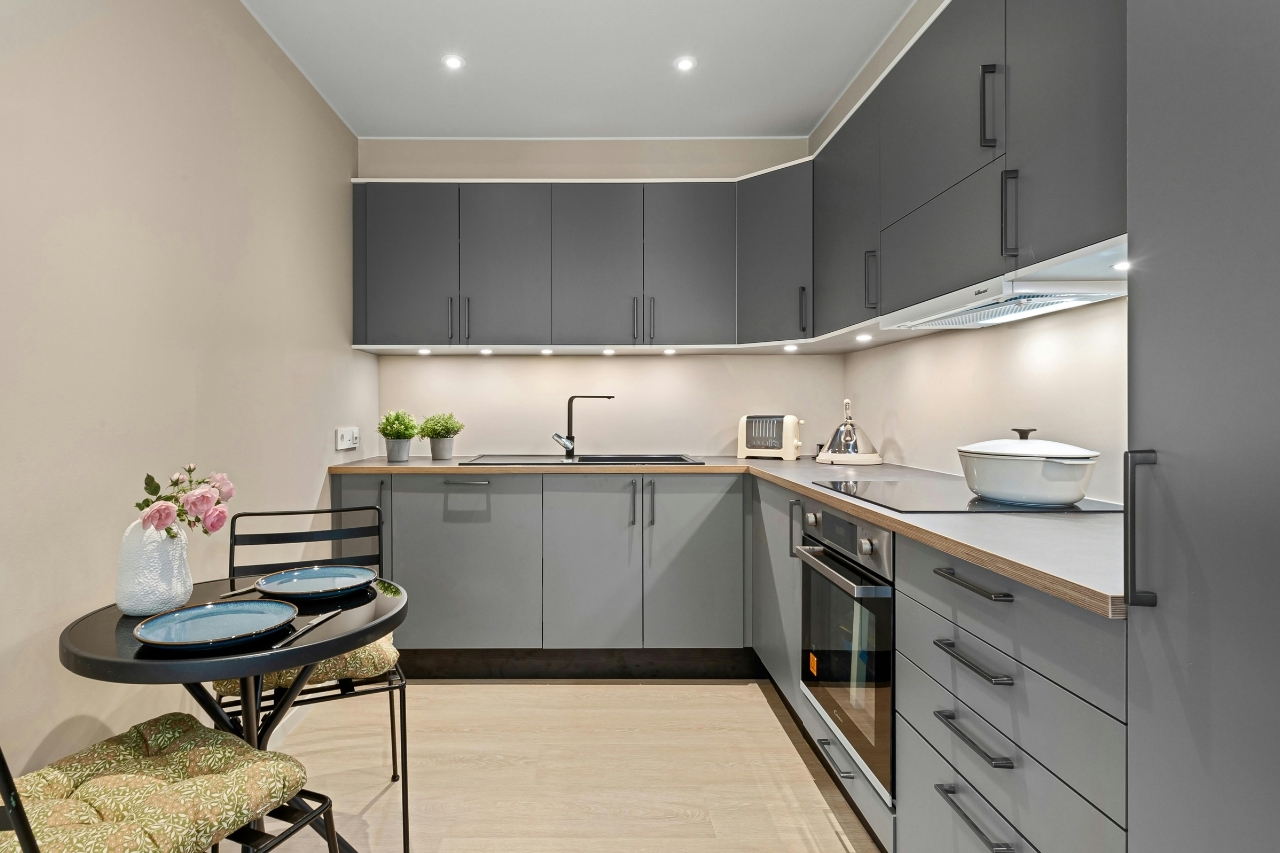
The kitchen has always been the functional heart of the Australian home. However, as household running costs climb and environmental awareness grows, modern kitchen design is rapidly shifting. With the national median cost for a complete mid-range kitchen renovation sitting at around $35,000 in 2026, homeowners are looking for ways to offset these upfront expenses through long-term savings. Making smart, sustainable choices during a redesign not only improves daily meal preparation but also helps significantly reduce electricity bills and minimise household waste. In today’s fast-paced world, an efficient kitchen layout can drastically reduce the time spent cooking and cleaning, giving families more time to relax.
Swapping to Sustainable Surfaces and Smart Cooking
A truly functional kitchen starts with the materials and fittings you choose. Following the Australian Government’s nationwide ban on high-silica engineered stone benchtops enacted in July 2024, the renovation market has seen a structural shift. Today, builders and homeowners are turning to sustainable, low-chemical alternatives like sintered stone and porcelain. These materials offer incredible durability and aesthetic appeal while being substantially safer to manufacture and install.
Alongside safer surfaces, there is a strong movement toward kitchen electrification. As part of Australia’s broader push for sustainable homes, more families are abandoning traditional gas models in favour of induction cooktops. These sleek appliances heat up much faster than gas, offer highly precise temperature control, and feature flat glass surfaces that are incredibly easy to wipe down.
Investing in Advanced Appliance Efficiency
Upgrading your whitegoods is arguably the most effective way to manage volatile national power prices, which currently see average quarterly household electricity bills ranging from $329 in Tasmania up to $595 in the ACT. According to the Australian Government’s energy guidelines, appliances can account for up to 30 percent of a home’s energy use, with fridges and freezers alone making up roughly 10 percent of household energy bills.
It is no surprise that the Houzz 2025 Kitchen Trends study revealed that 57 percent of homeowners pursuing a sustainable kitchen renovation prioritise upgrading to energy-efficient appliances. To support this, the Equipment Energy Efficiency Program legally requires retailers to display standardised Energy Rating Labels to transparently showcase estimated annual kilowatt-hour consumption. The rating system has evolved from a 6-star maximum to a 10-star cap, helping buyers easily identify super-efficient models.
When selecting a new refrigerator, it is important to consider how updated testing methods provide more accurate running cost estimates. Minimum Energy Performance Standards now require these units to undergo testing at both 16 degrees Celsius and 32 degrees Celsius rather than only at a maximum temperature. Furthermore, the advertised volume now only counts the actual physical space consumers can access for food storage, ensuring families get exactly what they pay for.
Combating Food Waste Through Better Storage
Energy efficiency is just one piece of the sustainability puzzle. Another massive benefit of upgrading your kitchen appliances is the ability to drastically reduce food spoilage. End Food Waste Australia recently launched ‘The Great Unwaste’, a nationwide campaign specifically targeting the 2.5 million tonnes of food waste generated by Australian households each year.
The economic and environmental impacts of this waste are staggering. Household and commercial food waste currently costs the Australian economy an estimated $36.6 billion annually and generates approximately 17.5 million tonnes of carbon dioxide emissions. To combat this issue in your own home, consider implementing a few strategic upgrades:
- Upgrade to multi-drawer cooling: Appliances with dedicated temperature zones keep fresh produce, meats, and dairy at their optimal microclimates, significantly extending their shelf life.
- Improve crisper management: Learn the specific humidity requirements for different fruits and vegetables to prevent premature wilting or rotting.
- Rethink your layout: Ensure your main cold storage is easily accessible from your primary prep area so ingredients are not forgotten at the back of a deep shelf.
- Enhance overall organisation: Utilise clear containers and conduct regular pantry audits to keep track of what foods need to be consumed first.
If you are looking for more ways to optimise your cooking space, exploring the variety of lifestyle and kitchen appliance guides available on the Home N Spice platform can provide plenty of practical inspiration. Combining efficient appliances with smart storage strategies ultimately transforms your kitchen into a highly functional environment.
Creating a more functional and energy-efficient kitchen is a highly rewarding investment. By choosing sustainable benchtop materials, embracing modern induction cooking technology, and selecting advanced appliances that combat both high power bills and food waste, you can build a culinary space that beautifully serves your family and the environment for many years to come. Whether you are undertaking a complete renovation or simply swapping out older models, every small upgrade contributes to a greener home. Taking the time to research your options ensures you receive the best return on investment while enjoying a modern, stylish kitchen.
