

Key Takeaways
- Look beyond listing photos by evaluating the neighborhood, lot, and daily livability.
- Compare total ownership costs, maintenance needs, and long-term value, not just the purchase price.
- Visit homes more than once and use inspections, market data, and a scorecard to make a confident decision.
- Choose the property that best fits your lifestyle, budget, and plans.
Listing photos are designed to make a home look its best. They can showcase a remodeled kitchen, a view-filled deck, or a beautifully staged living room, but they cannot fully show how a property feels to live in every day. Buyers considering West Linn, OR, Luxury Homes for Sale can use Monaghan Real Estate Group’s West Linn home-search resource to review active listings and recently sold properties while comparing different parts of the city. As a Portland-area real estate team serving West Linn and nearby communities, Monaghan Real Estate Group can help buyers place a home’s finishes, location, condition, and long-term fit in the proper context. A beautiful interior does not automatically make a home the right purchase. One buyer may love an open-concept kitchen during a 20-minute showing, then discover that the driveway is difficult to navigate, the backyard is mostly steep slope, or the daily trip to work is longer than expected. The goal is not to find fault with every property. It is to look beyond the presentation and understand the complete ownership experience before making an offer.
Start With the Neighborhood, Not Just the House
Visit the surrounding area more than once, ideally at different times of day. A quiet weekday afternoon may not reveal school traffic, evening parking limitations, construction activity, or noise from a nearby road. Walk a few blocks when possible, look at street lighting and sidewalks, and consider how easily you can reach parks, groceries, dining, schools, and the places you visit most often. West Linn includes distinct pockets with different routines. Some buyers prioritize quieter residential streets and larger lots. Others want easier access to Willamette-area amenities, river-adjacent settings, or routes toward Portland and Lake Oswego. Test the actual drive to work, school, appointments, and favorite destinations rather than relying on a map estimate. Future changes matter as well. Proposed housing, road work, public improvements, and redevelopment can affect traffic, nearby services, views, and construction activity.
Evaluate the Lot as Carefully as the Interior
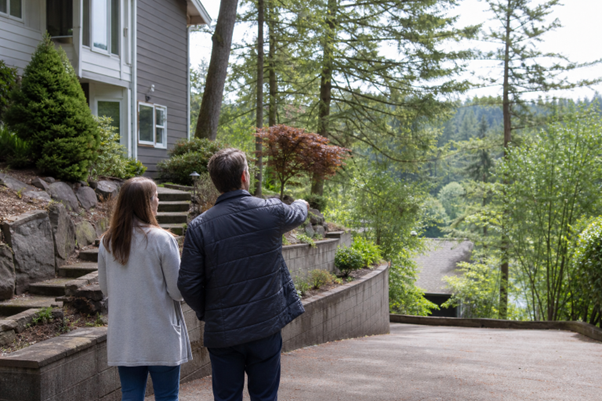
West Linn’s topography is part of its appeal, but it can also affect ownership. A hillside lot may offer privacy or views while creating more stairs, a sloped driveway, retaining walls, drainage concerns, and greater landscaping needs. During a showing, ask yourself whether the outdoor space is truly usable for your household or mainly attractive to look at from inside. Pay attention to water flow, mature trees, fencing, deck supports, exterior steps, and access around the home. Look for signs of standing water, moss buildup, soil movement, moisture in crawl spaces, or patched areas near foundations. These observations are not a replacement for professional advice, but they can help you decide where an inspection should focus. Properties with steep lots, older construction, extensive hardscaping, or large trees may deserve additional evaluation from qualified specialists.
Separate Luxury Features From Lasting Value
High-end finishes can be enjoyable, but they are only one part of value. A dramatic light fixture or custom tile may catch attention, while practical features often shape daily satisfaction more: storage, natural light, a flexible room, a functional entry, efficient heating and cooling, privacy, and outdoor areas that are easy to maintain. Consider the future buyer, too. Features that are highly personal, such as a themed media room, an unusual floor plan, or specialized built-ins, may not appeal to everyone later. Ask what it would cost to replace or maintain major systems and specialty features, including roofing, windows, decks, heating equipment, pools, elevators, or custom finishes. The most expensive-looking home is not necessarily the most economical one to own.
Build a Complete Ownership Budget
Your mortgage payment is only one line in the budget. Before removing contingencies, estimate the full monthly and annual cost of owning the home. This is particularly important for larger properties, wooded lots, and homes with substantial outdoor improvements.
- Property taxes and homeowners insurance
- Electricity, water, sewer, gas, and internet service
- Landscaping, irrigation, tree care, and seasonal cleanup
- Roof, siding, deck, driveway, and retaining-wall maintenance
- Homeowners association dues, if applicable
- A repair reserve for unexpected maintenance and future replacements
Insurance deserves early attention. Ask an insurance professional about availability, coverage terms, deductibles, and any property-specific concerns before you are too far into the transaction. A home can fit the purchase budget but still strain cash flow if maintenance needs are underestimated.
Use Market Data as a Tool, Not a Verdict
Citywide averages can obscure major differences among homes. A remodeled home on a level lot may not compare cleanly with a larger hillside property, a condominium, or a residence with a premium view. Study recent sales that are similar in location, size, age, condition, lot utility, and feature set. Also review time on market, price reductions, sale-to-list-price patterns, and competing inventory. Local development discussions can also provide useful context about future housing supply and neighborhood change. Recent reporting on housing development in West Linn illustrates why buyers should pay attention to planning decisions near a property. Market data should inform the offer, but it should not override your own budget, inspection results, and comfort with the home’s risks.
Create a Simple Home-Comparison Scorecard
After every tour, score each home before viewing the next one. Use a simple one-to-five rating, then write a few notes while your impressions are fresh.
- Location: Does the area support your daily routine and future plans?
- Condition: Which repairs may be needed in the first year, five years, and ten years?
- Layout: Does the floor plan work for your household now and later?
- Outdoor space: Is it private, useful, accessible, and manageable?
- Resale appeal: Would a future buyer value the same strengths?
- Total cost: Can you afford the likely ownership costs beyond the loan payment?
- Risk: Are slope, water, access, insurance, or nearby development concerns manageable?
Follow a Disciplined Pre-Offer Process
- Read seller disclosures closely and identify follow-up questions.
- Review comparable recent sales with attention to property differences.
- Estimate immediate repairs and likely near-term replacements.
- Confirm lending terms, insurance details, and available cash reserves.
- Research nearby projects, zoning, and land-use activity.
- Visit the home at least twice when possible, including at a different time of day.
- Ask what could limit the home’s resale appeal in the future.
- Set an offer based on total value rather than the pressure of a polished listing.
Common Questions From West Linn Buyers
What should I notice during the first home tour?
Look beyond décor. Notice street noise, natural light, odors, storage, floor-plan flow, signs of moisture, driveway access, and the apparent condition of major systems.
Are expensive finishes a sign of better value?
Not always. Location, layout, structural condition, lot usability, maintenance needs, and energy performance often have more lasting impact.
Should buyers avoid hillside homes?
No. Hillside homes can offer compelling privacy and views. They simply require closer attention to drainage, retaining walls, steps, access, landscaping, and long-term maintenance.
Choose the Home That Works Beyond the Showing
The best home is not always the newest, largest, or most stylish one. It is the property that fits your routine, budget, maintenance comfort, and long-term plans. Careful research, repeat visits, professional inspections, and a clear comparison process can provide more confidence than rushing toward the most photogenic listing.
Conclusion
A successful West Linn home purchase is about understanding the complete ownership experience, not just admiring a well-presented interior. By evaluating the neighborhood, lot characteristics, long-term maintenance, ownership costs, and future resale potential alongside the home’s features, buyers can make decisions based on lasting value rather than first impressions. Visiting properties more than once, consistently comparing homes, and relying on inspections and local research can reveal important details that listing photos cannot capture. The strongest purchase is the home that supports your lifestyle, budget, and plans, and gives you confidence it will remain a practical and enjoyable place to live for years to come.
