

A common frustration among homeowners is the persistent question: if drains clog so easily, why aren’t the pipes simply made larger? The answer lies in a sophisticated balance of engineering principles, cost-effectiveness, and long-term maintenance considerations. Plumbing engineers design drain systems not just to carry water away, but to do so efficiently and reliably, preventing issues far more complex than a simple blockage.
At the heart of drain pipe design are several critical factors. First, pipe diameter is carefully selected to ensure optimal flow velocity. Counterintuitively, a pipe that is too large can actually increase the likelihood of clogs. If the pipe is excessively wide, the water flow becomes too slow, allowing solid waste and debris to settle and accumulate along the pipe’s bottom. This process, known as sedimentation, creates a breeding ground for future blockages. Conversely, a pipe that is too small would restrict flow and back up quickly. The ideal diameter ensures that water moves swiftly enough to carry solids along with it, keeping the pipes clear.
Gravity drainage is the fundamental principle governing wastewater removal. Pipes are installed with a precise downward slope, allowing gravity to do the work. This slope, combined with the pipe’s diameter, dictates the flow rate and ensures efficient waste removal. Proper ventilation requirements are also paramount. Drain systems are not sealed units; they require vent pipes that allow air to enter the system. Without adequate venting, a vacuum can form, preventing water from flowing freely and causing gurgling sounds, slow drains, or even siphoning water out of P-traps.
P-traps themselves are a brilliant design feature. These curved sections of pipe, typically found under sinks, are intentionally designed to hold a small amount of water, creating a barrier against sewer gases entering your home. They also serve a crucial secondary purpose: they are often the first point where clogs form, precisely because their design slows water flow. This is a deliberate engineering choice. By concentrating potential blockages in an easily accessible P-trap, plumbers can clear them with minimal disruption, preventing more severe and inaccessible clogs deeper within the system.
In most residential settings, standard pipe sizes are carefully chosen to manage these dynamics. For instance, most sink, tub, and shower drains typically range from 1 1/4 to 1 1/2 inches in diameter, while toilet drains usually have a 2-inch throat. These smaller pipes then empty into progressively larger lines—often 3 to 4 inches in diameter within walls or underground—which eventually connect to main waste lines of 6 inches or more, leading to municipal sewer systems. This tiered sizing ensures that any blockage that does occur is more likely to happen in a smaller, more manageable pipe, rather than causing a catastrophic backup in a main sewer line.
The sizing of drain pipes is a complex engineering decision, balancing efficient waste removal, cost, space constraints, ventilation needs, and ease of maintenance. The goal is to create a system where, assuming proper usage and code compliance, clogs should either be infrequent or relatively simple to resolve. However, even the most perfectly designed system can fall victim to improper use or external factors, leading to the bigger plumbing problems we aim to avoid.
Why Proactive Home Maintenance Prevents Catastrophic Pipe Failures
Ignoring a slow-draining sink or a gurgling toilet might seem like a minor inconvenience, but these seemingly small issues are often early indicators of significant underlying problems that can escalate into catastrophic plumbing failures. Proactive home maintenance is not just about convenience; it’s about safeguarding your home’s structural integrity, your family’s health, and your financial well-being.

One of the most immediate and damaging consequences of a persistent clog is the increase in water pressure within your pipes. As debris accumulates, it restricts the flow of water, forcing the plumbing system to work harder. This elevated pressure places immense strain on pipes, especially in older homes with aging infrastructure. Over time, this constant stress can lead to hairline cracks, leaks, or even sudden, catastrophic burst pipes. A burst pipe can unleash gallons of water in minutes, causing extensive water damage to floors, walls, ceilings, and personal belongings. Such incidents often necessitate costly structural repairs, not just to the pipes but to the very fabric of your home.
Beyond immediate bursts, stagnant water and accumulated debris within clogs accelerate pipe corrosion. Waste materials, minerals from hard water, and even certain bacteria (known to cause microbiologically influenced corrosion or MIC) can erode the inner walls of metal pipes. This pitting and weakening of the pipe material makes them more susceptible to leaks and eventual failure.
Perhaps one of the most alarming consequences is a sewer backup. When a clog in a main sewer line becomes severe, wastewater has nowhere to go but back up into your home through drains and toilets. This raw sewage carries harmful bacteria and pathogens like E. coli and Salmonella, posing serious health hazards to your family. The cleanup is not only disgusting but also expensive, often requiring professional remediation to address contamination and prevent mold growth.
External factors also play a significant role in recurring clogs. Tree roots, for instance, are notorious for seeking out moisture and nutrients, often finding their way into sewer lines through tiny cracks or loose joints. Once inside, they grow, forming dense blockages that can completely obstruct the pipe. Another common issue, particularly in areas with unstable soil, is the formation of pipe bellies. This occurs when the ground shifts, causing a section of a pipe to sag, creating a low spot where waste and debris collect. Traditional snaking might temporarily clear a path, but the sag remains, leading to recurring clogs.
The long-term impact extends beyond the pipes themselves. Water damage from neglected clogs can lead to pervasive mold growth, which thrives in damp, dark environments. Mold not only causes unpleasant odors but can also trigger allergies, respiratory issues, and other health problems. Furthermore, chronic moisture can compromise your home’s structural integrity, leading to warped wood, damaged drywall, and even foundation issues if water is continually redirected or saturates the soil around your home.
Consider the statistics: The average household’s leaks alone can waste nearly 10,000 gallons of water annually, and approximately half of the 400,000 sewer blockages reported each year are caused by grease. These figures underscore the pervasive nature of plumbing issues that often begin with seemingly minor clogs. By understanding these risks, we can appreciate why addressing even a slow drain proactively is crucial to preventing a cascade of costly and hazardous problems.
The Pitfalls of Reactive DIY Fixes vs. Professional Solutions
When faced with a slow or clogged drain, the immediate impulse for many homeowners is to reach for a do-it-yourself (DIY) solution. While a plunger can be effective for minor, superficial clogs, many other DIY methods, particularly chemical drain cleaners, often do more harm than good, turning a manageable problem into a plumbing nightmare.
The Risks of Chemical Cleaners and Temporary Fixes
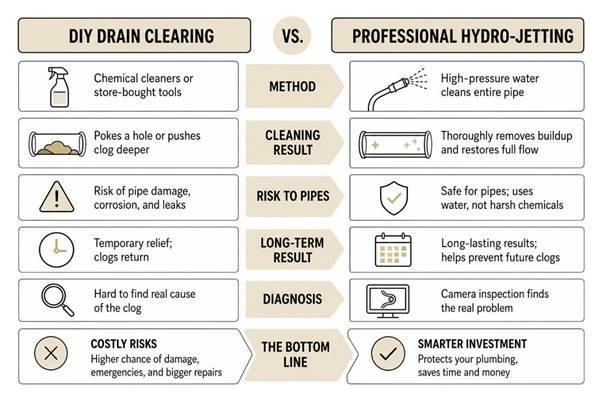
Chemical drain cleaners promise quick fixes, but their caustic nature comes with significant drawbacks. These products typically work by generating heat or dissolving organic matter through strong chemical reactions. While they might temporarily clear a path through a clog, they rarely eliminate the entire blockage. Instead, they often just push a portion of the buildup deeper into the pipe, creating a larger, more stubborn obstruction further down the line.
Moreover, the corrosive chemicals can severely damage your plumbing system. For instance, PVC degradation can occur when these hot, caustic liquids sit in plastic pipes, weakening the material and making it brittle. In older homes, chemical cleaners can accelerate pipe corrosion in metal pipes, leading to leaks or even complete pipe failure. The heat generated can also warp or melt plastic pipes. Beyond the damage to your plumbing, these chemicals pose serious health risks to household members and create hazardous conditions for plumbers who may later have to work on the affected pipes. Chemical cleaners offer temporary fixes that mask underlying issues, delaying the inevitable professional intervention and potentially increasing the overall repair cost.
Transitioning to Proactive Home Maintenance for Drain Health
Rather than relying on reactive and potentially damaging DIY methods, a proactive approach involving professional solutions offers long-term reliability and peace of mind. When a clog proves stubborn or recurs frequently, it’s a clear signal that a deeper issue is at play, requiring expert diagnosis and resolution.
Professional plumbers have access to advanced tools and techniques that effectively address the root cause of clogs without harming your pipes. One such solution is hydro-jetting. This process uses high-pressure water streams to thoroughly scour the interior walls of pipes, removing accumulated grease, scale, hair, and even tree roots. Unlike snaking, which merely pokes a hole through a clog, hydro-jetting cleans the entire pipe, restoring it to its original diameter and significantly reducing the likelihood of future blockages.
Another invaluable tool is the camera inspection. For recurring clogs or suspected deeper issues, a plumber can insert a small, flexible camera into your pipes. This allows them to visually identify the exact nature and location of the problem, whether it’s a tree root intrusion, a pipe belly, a crack, or significant corrosion. This diagnostic precision ensures that the correct solution is applied, saving time and money on guesswork.
Other professional solutions include mechanical augers (snakes) for specific types of clogs, root removal treatments, and in cases of severe damage, pipe repair or replacement. For aging pipes with widespread corrosion or cracks, innovative techniques like pipe lining can create a new pipe within the old one, extending its lifespan without extensive excavation.
Adopting proactive maintenance strategies for your drains is a fundamental shift from reacting to crises to preventing them. This involves not only mindful daily habits but also leveraging professional expertise for thorough cleaning and diagnostics. For more detailed insights into maintaining a healthy plumbing system and preventing drain issues, exploring proactive maintenance strategies can provide invaluable guidance.
Establishing a Routine for Long-Term System Reliability
Achieving long-term system reliability in your home’s plumbing begins with establishing a consistent routine maintenance schedule. Just as you service your car or perform regular check-ups on your HVAC system, your drains and pipes benefit immensely from ongoing attention. This proactive approach helps identify and address minor issues before they escalate, saving you from costly repairs and significant inconvenience down the line.
Recognizing Early Warning Signs of System Strain
The key to effective preventative care is knowing what to look for. Your plumbing system often provides subtle cues when it’s under strain. Learning to recognize these early warning signs can prompt timely intervention, preventing a small problem from becoming a major headache.
- Slow Drains: This is perhaps the most common indicator. If water takes longer than usual to drain from your sink, shower, or tub, it signifies an obstruction is forming. Don’t dismiss it as a minor annoyance; it’s a clear sign of accumulating debris.
- Gurgling Sounds: Hearing gurgling noises from drains or toilets when water is running elsewhere in the house is a red flag. These sounds often indicate trapped air caused by a partial blockage, suggesting that water is struggling to pass through the pipes. Multiple gurgling drains can point to a main sewer line issue.
- Foul Odors: Unpleasant smells emanating from your drains are a strong indication of decomposing organic matter (food, grease, hair) trapped within the pipes. This isn’t just an aesthetic issue; it can signal bacterial growth and potential health hazards.
- Water Backups: Any instance of water backing up into a sink, tub, or shower, especially when another fixture is used, points to a significant blockage. If water from your washing machine causes the toilet to gurgle or back up, it’s often a sign of a main line clog.
Monitoring for these signs, particularly if they recur or affect multiple fixtures, is crucial. Early detection allows for simpler, less invasive solutions.
Implementing Proactive Home Maintenance Habits
Beyond recognizing warning signs, adopting consistent habits can dramatically reduce the frequency and severity of drain clogs. These simple, daily practices contribute significantly to the health and longevity of your plumbing system.
- Use Drain Screens: Install inexpensive drain screens or strainers in all sinks, showers, and tubs. These physical barriers effectively catch hair, food particles, and other debris before they enter your pipes, preventing the vast majority of common clogs.
- Mindful Waste Disposal: Be extremely cautious about what goes down your drains.
- Never pour grease, fats, or oils down the kitchen sink. Allow them to cool and solidify, then dispose of them in the trash.
- Avoid flushing non-biodegradable items like “flushable” wipes, paper towels, feminine hygiene products, or dental floss. These items do not break down in water and are major contributors to blockages.
- Scrape food scraps into the trash before washing dishes, even if you have a garbage disposal. Disposals are meant for small amounts of food, not large quantities.
- Regular Flushing: Periodically flush your drains with hot water, especially after using the kitchen sink. This can help prevent grease and soap scum from solidifying. For an eco-friendly boost, consider a mixture of baking soda followed by white vinegar (allow it to fizz for 15-30 minutes before flushing with hot water) to help break down minor buildup.
- Scheduled Professional Maintenance: Even with the best daily habits, pipes can accumulate buildup over time. Consider scheduling professional drain cleaning every few years, especially for older homes or if you experience recurring issues. This can involve hydro-jetting to thoroughly clean pipes and camera inspections to identify hidden problems.
Daily Habits for Drain Protection:
- Always use drain screens in showers and sinks.
- Dispose of cooking grease in the trash, not down the drain.
- Avoid flushing anything other than human waste and toilet paper.
- Scrape plates clean before washing.
- Run cold water for 30 seconds after using the garbage disposal.
- Flush drains with hot water regularly.
- Address slow drains immediately with a plunger or natural cleaners.
By integrating these habits into your routine, you’re not just reacting to problems; you’re actively working to maintain a free-flowing and reliable plumbing system, ensuring peace of mind for years to come.
Frequently Asked Questions About Preventative Care
Understanding the nuances of plumbing maintenance can be complex. Here, we address some common questions homeowners have about preventative care and why certain issues arise despite best efforts.
Why do drain pipes clog if they are designed to code?
It’s a common misconception that if a plumbing system is installed according to code standards, it should never clog. However, drain pipes are designed with a delicate balance of factors, including pipe design, flow velocity, and material considerations, to ensure efficient waste removal. While codes dictate optimal sizing and slope to prevent sedimentation under normal circumstances, clogs often arise from factors outside of these design parameters.
The primary culprits are often related to waste disposal habits. Flushing non-dissolvable items, pouring grease and oil down the sink, or allowing excessive hair and soap scum to accumulate can overwhelm even a perfectly designed system. Additionally, external factors like tree root intrusion or ground movement causing pipe bellies are not accounted for in initial pipe sizing but can lead to severe blockages. So, while pipes are designed for efficiency, they are not impervious to misuse or environmental challenges.
How do clogged drains cause structural water damage?
The progression from a simple clog to structural water damage involves a chain reaction of increasing pressure and uncontrolled water. When a drain is blocked, water has nowhere to go but back up. This can lead to overflows in sinks, tubs, or toilets, spilling water onto floors, into cabinets, and behind walls.
The constant presence of water creates several problems:
- Increased Pipe Pressure: A clog creates backpressure in the pipe system. This added strain can cause existing weak points, cracks, or loose joints to leak. In severe cases, especially with older pipes, the pressure can lead to a burst pipe, unleashing a torrent of water.
- Hidden Leaks: Water from a clog or a pressure-induced leak can seep into unseen areas, such as within walls, under flooring, or into the foundation. Over time, this moisture can rot wood, degrade drywall, and weaken the structural integrity of your home.
- Foundation Issues: If water repeatedly leaks or backs up near your home’s foundation, it can saturate the surrounding soil. This can lead to soil expansion and contraction, causing foundation shifts, cracks, and costly repairs.
- Mold Growth: Damp, dark environments created by water damage are ideal breeding grounds for mold and mildew, which can cause health problems and further damage structural materials.
Thus, a seemingly minor clog can initiate a cascade of events that compromise your home’s structural integrity and result in extensive, expensive repairs.
Why are chemical drain cleaners discouraged by professionals?
Professional plumbers strongly discourage the use of chemical drain cleaners for several compelling reasons:
- Ineffective for Root Causes: Chemical cleaners are often a temporary fix. They might burn a small hole through a clog, but they rarely remove the entire obstruction. This means the problem will likely recur, often deeper in the system.
- Pipe Damage: The harsh chemicals and heat generated by these products can severely damage your pipes. They can corrode metal pipes, especially older ones, and degrade or even melt plastic PVC degradation pipes. This weakens the plumbing system, making it more prone to leaks or bursts.
- Hazardous to Health and Plumbers: These chemicals are highly caustic and can cause severe burns to skin and eyes. If they don’t clear the clog, a plumber may later have to work with pipes containing these dangerous substances, posing a significant safety risk.
- Masking Deeper Problems: By providing temporary relief, chemical cleaners can mask the true nature of a clog, delaying professional diagnosis of underlying issues like tree roots, pipe bellies, or severe corrosion. This delay often leads to more extensive and expensive repairs down the line.
While convenient, chemical drain cleaners are a short-term solution that can lead to long-term damage and greater expense, which is why professionals always recommend safer, more effective methods.
Conclusion
The journey from a slowly draining sink to a catastrophic plumbing emergency is often a gradual, insidious one. What begins as a minor inconvenience can, if ignored, lead to a cascade of problems affecting your home’s structural integrity, your family’s health, and your financial stability. From increased pipe pressure and corrosive damage to the hazards of sewer backups and pervasive mold growth, the consequences of neglecting clogged drains are far-reaching and severe.
By understanding the intricate design of your plumbing system, recognizing the early warning signs of trouble, and embracing proactive care through mindful habits and professional maintenance, you can effectively prevent these escalating issues. Shifting away from reactive, temporary DIY fixes, especially harsh chemical cleaners, towards professional solutions like hydro-jetting and camera inspections, offers not only immediate relief but also long-term savings and enhanced system reliability.
Investing in preventative plumbing maintenance is an investment in your home’s future. It provides peace of mind, protects your property’s value, and ensures a safe, healthy living environment for years to come. Don’t wait for a small clog to turn into a disaster; take control of your home’s plumbing health today.
