

Key Takeaways
- Room function should guide color, sheen, durability, and preparation needs.
- Paint samples can look very different in morning, afternoon, and evening light.
- Surface preparation has a major effect on paint adhesion and the final appearance.
- Different finishes work better for walls, ceilings, trim, doors, and moisture-prone spaces.
- Ventilation and careful product handling can make an interior project easier to manage.
- A room-by-room plan helps prevent wasted materials, delays, and color regrets.
Planning an interior paint project involves more than picking a color that looks good on a small swatch. Room layout, lighting, wall condition, daily activity, and existing finishes all influence the result. Working with experienced interior painters can help homeowners coordinate these details, but a thoughtful plan is useful for any painting project.
The most successful rooms balance appearance with practical needs. A calm bedroom may call for soft color and a low-sheen finish, while a busy entryway needs a finish that holds up to fingerprints, bags, pets, and frequent cleaning. Starting with the room itself makes every later decision more straightforward.
Start With a Room Plan
Before purchasing paint, consider how each room is used and what must stay in place. Flooring, cabinets, countertops, upholstery, artwork, and trim all affect how a new wall color will read. Also consider ceiling height, natural light, whether the space connects to nearby rooms, and how much wear the walls receive.
Ask a few simple questions: Should the room feel bright, cozy, focused, formal, or restful? Does it receive direct sun, cool northern light, or very little daylight? Will walls be exposed to moisture, cooking residue, children, pets, or frequent cleaning? These answers create a practical starting point for color and finish choices.
Choose Colors by Light and Mood
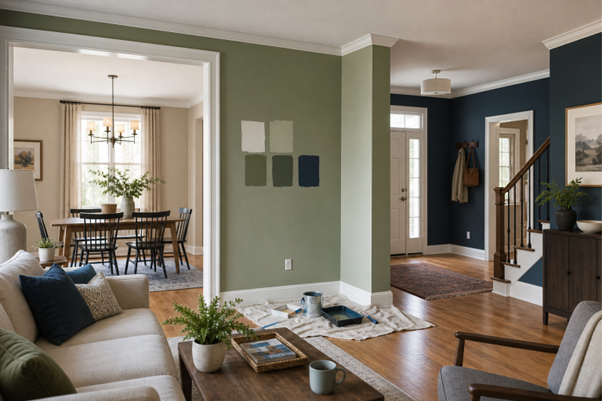
Paint color is never completely fixed. Daylight, warm or cool bulbs, shadows, window direction, and nearby furnishings can shift its appearance throughout the day. Test larger samples on more than one wall rather than relying only on a small paper chip. Check each sample in the morning, afternoon, and evening before making a final decision.
Soft neutrals often provide a flexible backdrop for changing decor. Warm earth tones can make larger rooms feel more grounded, while muted blues and greens may support a calmer atmosphere. Deep shades can add drama in a dining room, study, or accent area. Light colors may help compact spaces feel more open, although the right trim contrast and lighting matter just as much.
Match Paint Sheen to Room Use
Sheen affects how paint reflects light, hides minor flaws, and handles cleaning. Higher-sheen finishes generally show more surface texture but tend to be easier to wipe. Lower-sheen finishes create a softer look and can be more forgiving on imperfect walls.
- Flat or matte: Often a good choice for ceilings, low-traffic rooms, and walls with minor texture.
- Eggshell: A versatile option for bedrooms, living rooms, and many hallways.
- Satin: Useful in high-traffic areas that require more frequent cleaning, such as kitchens and entryways.
- Semi-gloss: Commonly used on trim, doors, and bathroom surfaces where durability matters.
- High-gloss: Best for selected details where a reflective, polished look is intentional.
Walls, ceilings, trim, cabinets, and doors do not need the same product or finish. Using the right sheen for each surface can make the home look more cohesive while simplifying long-term maintenance.
Use a Room-by-Room Paint Guide
Living Rooms and Bedrooms
Living rooms can accommodate more personality because they are often gathering spaces. Choose colors that work with rugs, seating, and artwork, while leaving room for future decor changes. Bedrooms usually benefit from softer contrast and less intense color, especially when the goal is a comfortable space for rest.
Kitchens, Dining Areas, and Bathrooms
Kitchens and dining spaces need finishes that can handle daily activity, food splatters, and routine wiping. Coordinate wall color with cabinets, counters, flooring, and fixtures. Bathrooms and laundry rooms require extra attention to moisture, airflow, and existing damage. Address leaks, mildew, peeling paint, or failing caulk before applying a new finish.
Hallways, Entryways, and Home Offices
Hallways and entryways receive repeated contact, so a durable, washable finish is often worthwhile. In home offices, consider window glare and computer screens. A muted color with moderate sheen can support focus without making the space feel dark or sterile.
Prepare Surfaces Before Painting
Paint cannot reliably conceal dust, grease, loose coating, cracks, stains, or damaged drywall. Clean walls first, scrape peeling areas, fill holes, sand rough repairs, and caulk visible gaps around trim when appropriate. Prime repaired, glossy, stained, or porous areas so the finish coat has a more even surface.
Older homes require additional caution. Homes built before 1978 may contain lead-based paint, and dry scraping or sanding can create hazardous dust.
Think About Air Quality and Ventilation
Paint odors and airborne chemicals are easier to manage when ventilation is part of the plan. Open windows when conditions allow, use fans to move fresh air through the work area, and run bathroom or kitchen exhaust fans that vent outdoors. The EPA offers practical guidance for addressing indoor environmental concerns during remodeling, including source control and ventilation considerations.
Follow product labels for application, drying, cleanup, and storage. Keep children, pets, and sensitive occupants away from freshly painted rooms, and plan major projects for times when the home can be less occupied.
Build a Practical Project Plan
Create a written list for each room, including the selected color, sheen, surfaces to be painted, needed repairs, and estimated paint quantity. Protect floors, furniture, fixtures, and nearby belongings before work begins. Complete repairs and priming before finish coats, and allow extra time for drying, touch-ups, and cleanup.
Painting one connected area at a time can reduce disruption and help maintain color consistency. Keep labeled leftover paint and a record of product names, colors, and sheens for future touch-ups.
Avoid Common Painting Mistakes
- Choosing from a tiny swatch instead of testing a larger sample in the room.
- Using one sheen everywhere without considering wear, moisture, or surface condition.
- Skipping cleaning and repairs before painting.
- Rushing between coats instead of following the label drying times.
- Ignoring artificial lighting and changes in daylight.
- Buying too little paint and having no matching product left for repairs.
Conclusion
A successful interior painting project combines thoughtful planning with practical decision-making. By matching colors and finishes to each room’s purpose, carefully preparing surfaces, and allowing proper testing and drying, you can achieve a durable, attractive finish. A room-by-room approach creates a home that is cohesive, functional, and easy to maintain.
