

Our homes are our most important investments, constantly battling the forces of nature. As we move into July 2026, climate patterns are becoming more extreme, with regions facing everything from intense heatwaves and severe hailstorms to heavy rains and wildfires. This escalating environmental pressure means that robust protection for our properties is no longer optional. Effective home exterior and Punctual climate maintenance AC noise is crucial for homeowners everywhere, acting as the first line of defense against costly damage and ensuring our homes remain safe and sound for years to come.
We understand that maintaining a home’s exterior can seem like a daunting task, but proactive steps can save you significant time, money, and stress in the long run. In this guide, we will explore how various climate hazards impact different parts of your home’s exterior, from roofing and siding to windows and landscaping. We will also dive into specific strategies and materials that offer superior protection, helping you fortify your home against the elements. Beyond the visible exterior, managing your home’s climate resilience also impacts internal systems. For instance, Exterior stucco maintenance can prevent AC noise and ensure your heating and cooling systems operate efficiently. Join us as we uncover essential maintenance tasks, warning signs to watch for, and how to balance costs with long-term value in your climate-resilient upgrades.
Protect your home with expert care and smart upgrades today.
The exterior of our homes bears the brunt of increasingly severe weather. From intense heat to devastating storms, understanding these climate hazards is the first step toward effective maintenance and resilience. Regions across North America, like Edmonton in Alberta and Charleston in South Carolina, offer stark examples of diverse and challenging environmental pressures.
Extreme Heat: Rising temperatures, such as Edmonton’s projected increase of 6°C by the 2080s with 34 high heat days annually, place immense stress on exterior materials. Prolonged heat can lead to the warping, cracking, and premature degradation of roofing, siding, and sealants. It also exacerbates the urban heat island effect, making homes hotter and increasing cooling demands.
Wildfires: For communities in or near wildland-urban interfaces, wildfires pose an existential threat. Wind-driven embers can travel up to 2 kilometers, igniting homes far from the fire front. Materials that resist ember intrusion and radiant heat are critical. The 2016 Fort McMurray wildfires, causing $4 billion in insured losses, underscore this devastating reality.
Heavy Rain and Flooding: Increased precipitation, like the 54 mm rise expected in Edmonton by the 2080s, coupled with events such as Calgary’s 2013 flooding ($1.8 billion in insured losses), highlights the risk of water intrusion. Heavy rains can overwhelm gutters, cause roof leaks, saturate siding, and lead to basement flooding and foundation damage if drainage is inadequate.
Hail: Hailstorms are a persistent threat, especially in Alberta, where the 2020 Calgary hailstorm alone caused $1.2 billion in insured losses. Edmonton experiences approximately four hailstorms annually, with the August 2019 event costing $90 million. Hail can puncture roofs, dent siding, shatter windows, and compromise exterior finishes, creating openings for further water damage.
High Winds: Strong winds, often accompanying storms, can tear off shingles, rip siding, damage gutters, and even compromise structural integrity. In coastal areas like Charleston, wind-driven rain can force moisture into even minor exterior failures, leading to widespread damage.
Winter Storms: Regions with harsh winters, including Edmonton, contend with heavy snowfall, ice, and extreme cold. The January 2020 snow squall in Edmonton, which caused nearly 100 emergency responses, demonstrates the impact. Freeze-thaw cycles can crack foundations and masonry, while ice dams on roofs can lead to significant water infiltration.
Drought: While seemingly less damaging to exteriors, prolonged drought can cause soil to shrink, leading to foundation settlement and cracking. It also increases wildfire risk by drying out vegetation.
Specific climate phenomena further exacerbate these issues:
Understanding these specific threats allows us to tailor our home exterior and climate maintenance strategies to build truly resilient homes.
Hardening the Protective Shell: Roofing, Siding, and Thermal Insulation
Our home’s exterior acts as its primary protective shell. Strengthening this shell with resilient materials and proper installation is paramount to climate maintenance.
Roofing Materials and Installation Practices
The roof is the most exposed component of a home, making material selection and installation critical for protection against hail, wind, wildfire, and ice damming.
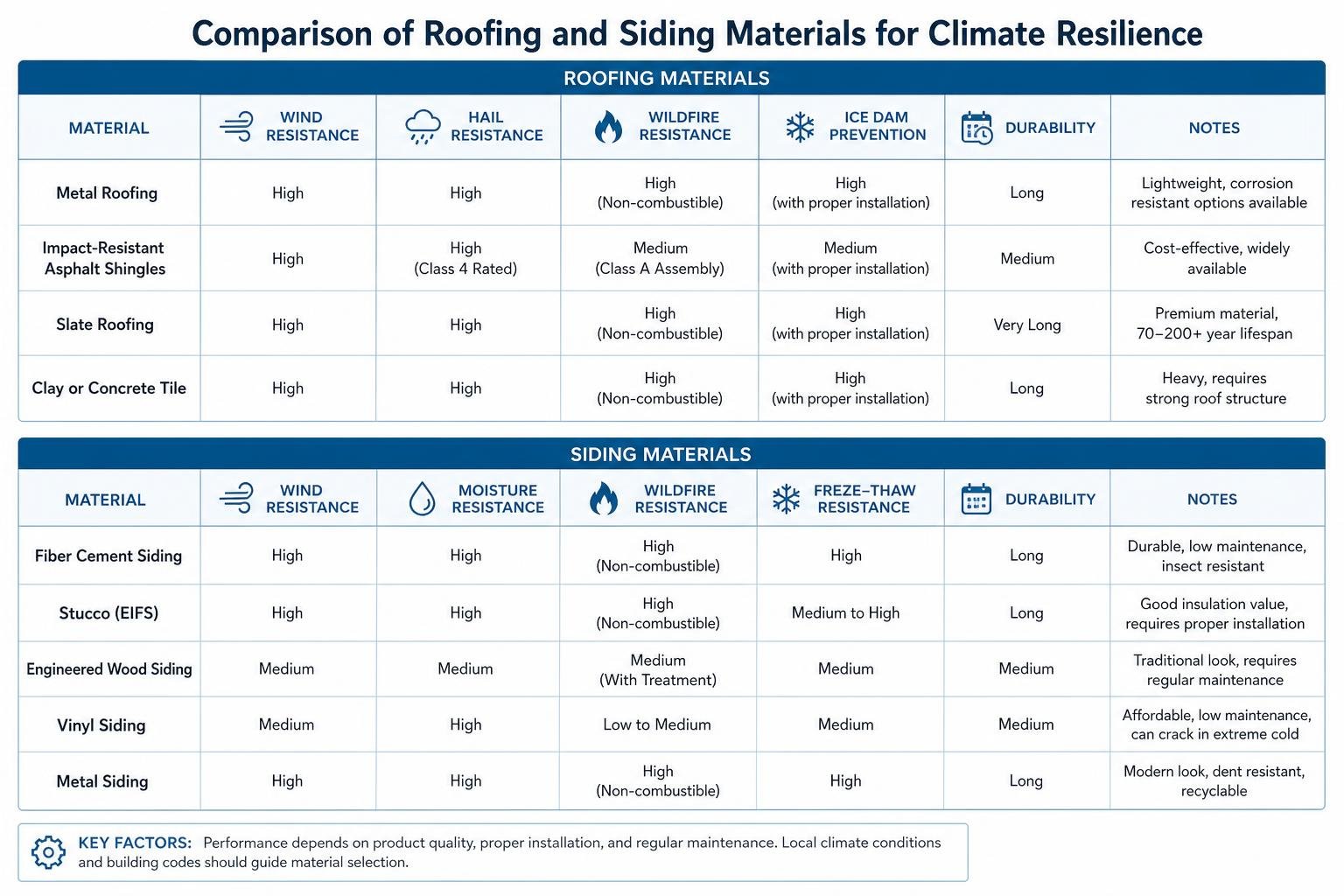
Here’s a comparison of common roofing and siding materials for climate resilience:
Siding Systems and Exterior Wall Resilience
Siding is crucial for protecting walls from moisture intrusion, wind, and fire. Selecting the right materials and ensuring proper installation is key.
Improving Energy Efficiency Through Home Exterior and Climate Maintenance
Beyond protection, the exterior also plays a significant role in a home’s energy efficiency, which becomes even more critical with extreme temperatures.
Landscaping, Drainage, and Water Management Strategies
The area immediately surrounding your home is just as critical as the structure itself in preventing climate-related damage. Strategic landscaping and effective water management can significantly mitigate risks like flooding, erosion, and even wildfire.
Water Management and Home Exterior and Climate Maintenance
Effective water management is foundational to protecting your home from moisture-related issues.
Wildfire Mitigation: FireSmart Zones and Zone 0 Hardening
In wildfire-prone areas, landscaping is a critical component of home protection.
Seasonal Checklists, Warning Signs, and Professional Maintenance
Proactive, seasonal maintenance is the cornerstone of home exterior resilience. By following a structured approach and recognizing warning signs, we can address minor issues before they escalate into costly repairs.
Seasonal Maintenance Tasks
A year-round maintenance calendar ensures comprehensive protection:
What is the difference between climate resilience for renovations versus new construction?
New Construction: For new homes, climate resilience can be integrated from the ground up. This involves selecting inherently resilient materials (e.g., Class A roofing, fiber cement siding), incorporating advanced building science principles (e.g., continuous exterior insulation, rain screens), and designing for local climate extremes (e.g., roof pitch for snow load, elevated foundations for flood risk). Building codes are increasingly incorporating climate resilience standards, such as the Colorado Wildfire Resiliency Code (CWRC) by July 2026.
Renovations: For existing homes, achieving climate resilience often involves structural retrofitting and modular upgrades. This means addressing vulnerabilities in stages, such as replacing an old roof with a Class A assembly, upgrading to energy-efficient windows, or adding exterior insulation when re-siding. A cost-benefit analysis helps prioritize upgrades based on risk and return on investment. While renovations may not achieve the same integrated resilience as new construction, significant improvements can be made, often exceeding previous building code standards.
How do homeowners balance resilient upgrades with insurance considerations?
Investing in climate-resilient upgrades can offer significant long-term value and enhance property marketability. Increasingly, these upgrades also influence homeowners’ insurance.
What are the warning signs that a home exterior needs immediate professional attention?
Ignoring early warning signs can lead to extensive and expensive damage. Look for these indicators that warrant immediate professional assessment:
Addressing these issues promptly with professional repairs is crucial to prevent further damage and maintain your home’s structural integrity and value.
Conclusion
In an era of intensifying climate challenges, proactive home exterior and climate maintenance is more than just a chore—it’s an essential investment in the longevity, safety, and value of our properties. By understanding the specific climate hazards our homes face, selecting resilient materials, implementing effective water management strategies, and adhering to seasonal maintenance checklists, we can significantly fortify our homes.
The journey toward a climate-resilient home is continuous, requiring vigilance and a willingness to adapt. Whether through structural retrofitting during renovations or incorporating advanced designs in new construction, every step taken contributes to greater protection. Balancing cost with long-term value and leveraging insurance considerations can make these upgrades more accessible. By addressing warning signs promptly and seeking professional expertise when needed, we empower ourselves with the peace of mind that comes from knowing our homes are well-equipped to withstand the elements, ensuring their structural integrity and comfort for generations to come.
