

Moving to a new home is an exciting milestone, but packing up the kitchen often feels like an overwhelming puzzle. Between bulky whitegoods, delicate coffee machines, and fragile dishware, this room requires a highly strategic approach. Recent industry data indicates that approximately 20 per cent of Australians report damage to furniture or fragile household items during self-managed relocations. To avoid these costly mistakes, you need a solid plan. For many, hiring reliable Perth removalists is the best way to ensure that heavy and delicate kitchen pieces are transported with expert care. However, if you are handling some of the packing yourself, following professional methods will keep your valuable culinary tools safe and sound during the journey.
Decluttering and Managing E-Waste Before Packing
Before you start wrapping plates and boxing up blenders, take the time to thoroughly declutter. Moving is the perfect opportunity to review your essential kitchen setup and decide which appliances are genuinely worth packing and taking to the new home. Letting go of items you no longer use will save you time, energy, and moving box space. Often, we accumulate gadgets that seemed like a good idea at the time but now only gather dust. Sorting your kitchenware into keep, donate, and discard piles is the most efficient way to begin the moving process.
If you come across broken toasters, outdated microwaves, or faulty kettles during your sorting, do not just toss them in the regular rubbish bin. E-waste is a massive environmental issue across the country. According to the Department of Climate Change, Energy, the Environment and Water, the average Australian household produced 20 kg of e-waste in 2019, contributing to 511,000 tonnes nationally and resulting in about $430 million worth of valuable materials being lost to landfill. Proper disposal ensures that precious metals and plastics are recycled and repurposed into new products.
To support environmental efforts, the Western Australian Government implemented a statewide industry ban on sending e-waste to landfill by 2024. Perth residents can utilise permanent, free e-waste drop-off locations like the Recycling Centre Balcatta or Tamala Park. Many local councils also offer the Verge Valet service, allowing you to pre-book bulky e-waste collections right from your curb. For smaller gadgets containing rechargeable power sources, you can rely on B-cycle, which is Australia’s official government-backed battery stewardship scheme. Taking a few extra hours to dispose of these items ethically makes a significant difference to local ecosystems.
Best Practices for Packing Kitchen Appliances
Once you have sorted out what is coming with you, it is time to pack your remaining appliances properly. Treating your cooking equipment with care now prevents mechanical issues later. Professional packers highly recommend following a few straightforward steps to secure these items for transport.
- Clean and dry everything: A critical pre-packing step is ensuring all kitchen appliances are thoroughly cleaned and completely dried. Any trapped moisture can lead to mould and permanent odour damage while sitting in a dark moving truck.
- Remove detachable components: Take out microwave glass trays, blender jugs, and coffee machine water tanks. Wrap these fragile components separately to prevent them from bouncing around and causing internal damage during transit.
- Secure electrical cables: Loose electrical cords are a common but preventable hazard. Tightly coil all appliance cables and secure them with twist ties or packing tape to prevent them from snagging on other items or scratching delicate surfaces.
- Use original packaging: Whenever possible, pack gadgets in their original appliance boxes. The factory-moulded foam inserts offer vastly superior shock absorption compared to generic cardboard moving boxes.
- Watch the weight: To prevent box blowouts and minimise the risk of personal injury, moving experts strongly advise keeping individual packed boxes under a strict 20-kilogram weight limit.
Securing Your Fragile Dishware and Glassware
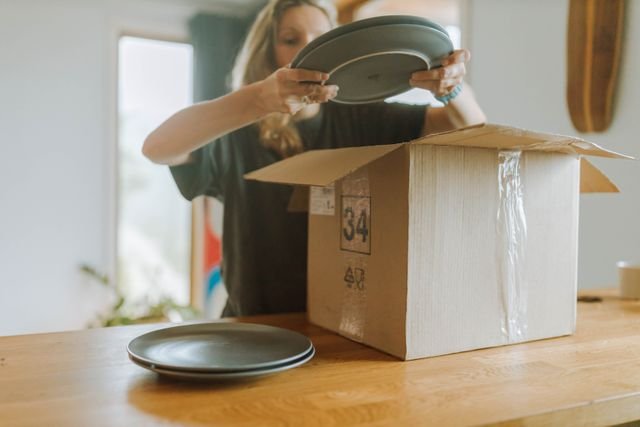
Plates, bowls, and glasses are notoriously difficult to transport without chipping or shattering. Start by reinforcing the bottom of your moving boxes with high-quality packing tape and adding a thick layer of crumpled packing paper for cushioning. When packing plates, always stand them vertically on their edges rather than stacking them flat. This vertical orientation allows the strongest part of the plate to bear the pressure and absorb bumps in the road.
Wrap each piece of glassware individually in packing paper, filling the empty spaces inside cups and mugs to absorb external shocks. You can also use soft kitchen items like tea towels, cloth napkins, and oven mitts as extra padding between fragile items. This not only protects your dishware but also efficiently packs your kitchen linens at the same time.
Once your fragile boxes are packed, label them clearly with a permanent marker. When loading the transit vehicle, professional removalists employ precise physics. They secure heavy kitchen whitegoods flat to the floor to balance the truck, which subsequently reduces the transit vibrations that often shatter the lighter, fragile items stored securely above them.
The Hidden Costs of a Rushed Move
While taking a do-it-yourself approach might seem like a great way to save money, the financial toll of a rushed DIY move can add up quickly. Australians spend an average of $332 out of pocket to replace items broken or mishandled during transit. Furthermore, moving heavy whitegoods without the correct lifting equipment can lead to severe physical injuries or property damage, such as scratched floorboards and dented walls. In stark contrast, data from the Australian Furniture Removers Association shows that roughly 92 per cent of moves handled by professionals are completed without any damage claims.
The Australian removalist industry is valued at approximately $2 billion annually, reflecting a high reliance on professional logistics to transport valuable household goods safely across local and interstate distances. Taking the time to declutter, recycle your e-waste responsibly, and pack your remaining items with expert techniques will make your relocation significantly smoother. By safeguarding your appliances and dishware, you can arrive at your new property ready to unpack and enjoy your kitchen from day one.
