

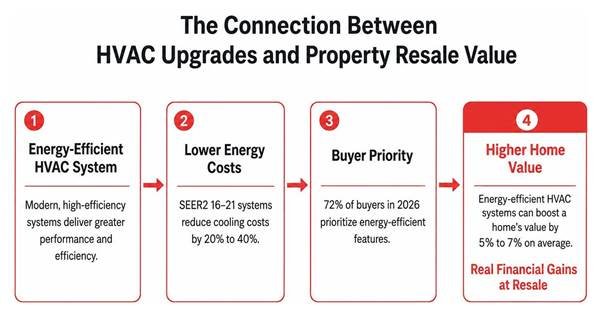
Many homeowners focus on cosmetic upgrades when preparing to sell, but the truth is that a home’s heating and cooling system often holds more weight with buyers and appraisers. We’ve seen that energy-efficient HVAC systems are no longer just about comfort; they are a significant factor in a home’s market value. In fact, a modern, high-efficiency system can boost a home’s value by 5% to 7% on average. With 72% of buyers now prioritizing energy-efficient features in 2026, we understand the critical link between your HVAC system and your property’s resale potential. This article will explore how choosing expert HVAC services can translate into real financial gains for your home.
The landscape of home buying and selling has shifted dramatically, with energy efficiency emerging as a top priority for prospective homeowners. This focus directly impacts the value of your property, with your HVAC system playing a central role. As of September 2026, the connection between an energy-efficient HVAC system and increased home value is undeniable, driven by evolving standards, buyer expectations, and long-term financial benefits.
Modern HVAC performance is primarily measured by SEER2 (Seasonal Energy Efficiency Ratio 2) ratings for cooling and HSPF2 (Heating Seasonal Performance Factor 2) for heating. These updated standards, implemented in 2023, reflect a more accurate assessment of real-world energy consumption. A higher SEER2 rating indicates greater efficiency, translating directly into lower utility bills for the homeowner. For sellers, this means a significant resale premium. Homes equipped with systems rated between 16 and 21 SEER2, for instance, can reduce cooling costs by 20% to 40%, a tangible benefit that buyers are willing to pay for. This commitment to efficiency is not just about saving money; it’s about future-proofing a home against rising energy costs and demonstrating responsible homeownership.
The appraised value of a home is also directly influenced by the quality and efficiency of its HVAC system. Appraisers are increasingly recognizing energy-efficient features, often using specific addendums to document these upgrades. A modern, high-efficiency HVAC system can add an impressive $5,000 to $10,000 to your home’s appraised value, positioning your property favorably in the market. This isn’t merely a subjective assessment; it’s a data-driven valuation based on the system’s contribution to lower operating costs and enhanced comfort.
Heat pumps, in particular, are gaining significant traction and commanding a notable price premium. These versatile systems provide both heating and cooling, often at a much higher efficiency than traditional furnaces and air conditioners. According to a peer-reviewed study covering 23 U.S. states, air-source heat pumps command a 4.3% to 7.1% price premium. This translates to substantial added value, making heat pumps a strategic investment for homeowners looking to maximize their return. The energy savings from a high-efficiency system are also a major draw, with annual reductions in utility bills ranging from 10% to 30%. This ongoing financial benefit is a powerful selling point that resonates with budget-conscious buyers.
HVAC Efficiency Feature Resale Value Impact (Average) Cost Recovery at Resale Buyer Attraction High-Efficiency HVAC 5% – 7% increase in home value 85% – 100% of cost recovered Very High (72% of buyers prioritize) Heat Pump System 4.3% – 7.1% price premium Significant, often exceeding initial investment due to incentives High (lower operating costs, dual function) Smart Thermostat & Zoning 3% – 5% boost in appeal High, due to perceived modernity and control High (convenience, energy management) Updated Central AC $2,500 – $5,000 buyer premium Strong, often a baseline expectation Essential in warm climates
Impact on Property Appraisal and Time on Market
Beyond the initial price premium, an energy-efficient HVAC system significantly influences how your home is perceived by appraisers, lenders, and ultimately, buyers. These factors collectively contribute to both the final sale price and the speed at which your property sells.
One crucial concept in appraisal is “effective age.” While your home may be 20 years old, a new, high-efficiency HVAC system can reduce its effective age in the eyes of an appraiser. This is because major mechanical systems like HVAC contribute significantly to a home’s overall functionality and expected lifespan. An updated system signals a well-maintained property, mitigating perceived future repair costs for buyers and appraisers alike.
To properly capture the value of these upgrades, appraisers utilize tools like the Residential Green and Energy Efficiency Addendum. This standardized document allows them to formally report energy-efficient features, including HVAC specifics, which can directly influence the valuation. Without proper documentation of your new system’s SEER2 rating, installation date, and other features, appraisers might overlook these valuable additions, potentially leaving thousands of dollars on the table.
The market velocity of homes with updated HVAC systems is also noticeably higher. Properties featuring modern, energy-efficient HVAC units sell 10% to 15% faster, and in some cases, up to 11 days sooner than comparable properties with older systems. This accelerated sales cycle is a direct result of increased buyer confidence. Prospective homeowners are less likely to hesitate when they see a new, reliable system, as it removes a major uncertainty and potential future expense.
Furthermore, an old or non-functional HVAC system can pose significant hurdles for financing. Buyers seeking FHA or VA loans, for example, may be denied if the home’s heating and cooling systems are deemed unsafe or in poor condition. By contrast, a new, high-efficiency system ensures the home meets lending requirements, broadening your pool of potential buyers and reducing the risk of a sale falling through due to inspection or appraisal issues.
Why Modern Buyers Prioritize Heating and Cooling Performance
Today’s homebuyers are more informed and financially savvy than ever before. Their priorities extend beyond aesthetics, delving deep into the long-term operational costs and comfort aspects of a home. This shift makes heating and cooling performance a critical decision-making factor.
One of the most immediate concerns for buyers is operating expenses. HVAC systems account for over 40% of a typical residential energy bill. With utility costs consistently on the rise, buyers are acutely aware that an inefficient system can lead to hundreds, if not thousands, of dollars in additional expenses each year. A high-efficiency unit promises significant annual energy savings, reducing utility bills by 10% to 30%, which translates into more disposable income for the new homeowner. This tangible financial benefit is a powerful motivator.
Beyond direct costs, a new HVAC system acts as a “maintenance signal” to buyers. An updated system suggests that the previous owner took good care of the property, investing in critical infrastructure rather than just superficial improvements. Conversely, an old, noisy, or visibly worn system can be a major red flag, implying neglect and foreshadowing costly repairs down the road. Buyers often view a modern HVAC system as a sign of overall home care, fostering trust and confidence in their investment.
Move-in readiness is another key priority. Many buyers prefer homes that require minimal immediate upgrades or repairs. A new HVAC system means they won’t have to factor in the expense and disruption of a major system replacement shortly after moving in. This convenience and peace of mind contribute significantly to a home’s appeal, making it more attractive to a broader range of buyers.
Finally, indoor comfort and humidity control are increasingly important. Modern high-efficiency systems, especially those with variable-speed motors, offer superior temperature consistency and can significantly reduce indoor humidity. This creates a more comfortable living environment, particularly in humid climates. For buyers, this translates to a healthier, more pleasant home experience, enhancing their perception of the property’s overall quality of life.
Why Investing in Expert HVAC Services Protects Home Equity
The installation of a new HVAC system is a significant investment, and to truly protect and enhance your home equity, it’s crucial to rely on expert HVAC services. Professional installation ensures optimal performance, compliance with regulations, and the long-term reliability that contributes to resale value.
One of the most critical aspects of professional service is accurate load calculation and system sizing. An HVAC system that is too large or too small for your home will operate inefficiently, leading to higher energy bills and premature wear. Expert technicians perform a detailed Manual J load calculation, which considers factors like square footage, insulation levels, window types, and climate zone to determine the precise heating and cooling capacity needed. This ensures your system runs at peak efficiency, maximizing energy savings and extending its lifespan.
Code compliance is another non-negotiable. HVAC installations must adhere to local building codes and manufacturer specifications. Expert HVAC professionals are knowledgeable about these regulations, ensuring your system is installed safely and legally. This prevents potential issues during home inspections and guarantees your system’s warranty remains valid.
Speaking of future-proofing, the industry is currently undergoing a significant transition. As of September 2026, the EPA is phasing out high-Global Warming Potential (GWP) refrigerants like R-410A in favor of low-GWP alternatives such as R-454B. When you invest in a new system, ensuring it is compliant with these evolving refrigerant standards is vital. This not only demonstrates environmental responsibility but also protects you from future service challenges and potentially higher costs associated with phased-out refrigerants. A system compliant with R-454B adds buyer confidence, as it signals a modern, sustainable, and easily serviceable unit for years to come.
Finally, proper installation and regular maintenance by certified professionals are essential for warranty preservation. Most HVAC manufacturers require professional installation and annual servicing to keep warranties valid. A well-documented history of expert maintenance not only ensures your system performs optimally but also provides valuable proof of care for potential buyers, further solidifying your home’s value. To learn more about how a new HVAC system can increase your home’s value and the importance of professional installation, we recommend exploring resources on the topic of expert HVAC services.
Leveraging Expert HVAC Services for Sizing and SEER2 Selection
The impact of expert HVAC services extends deeply into the technical specifics of your system, ensuring you select and install components that truly maximize efficiency and home value.
A cornerstone of proper HVAC installation is the Manual J load calculation. This detailed assessment, performed by skilled technicians, goes beyond simple square footage to analyze every aspect of your home that influences heating and cooling requirements. It considers insulation R-values, window U-factors, ceiling heights, orientation to the sun, and even the number of occupants. An accurate Manual J calculation prevents oversizing or undersizing, which are common culprits behind inefficient operation, uneven temperatures, and premature system failure. When your system is perfectly sized, it runs optimally, providing consistent comfort and maximizing its high SEER2 rating.
Modern HVAC technology offers advanced features like variable-speed compressors. Unlike single-stage systems that are either “on” or “off,” variable-speed units can adjust their output to precisely match your home’s heating or cooling needs. This leads to incredibly quiet operation, superior dehumidification, and dramatically reduced energy consumption. Expert HVAC professionals can guide you in selecting the right variable-speed system, ensuring it integrates seamlessly with your home and lifestyle, boosting both comfort and energy optimization.
Ductwork integrity and airflow balancing are often overlooked but are critical to system efficiency. Leaky ducts can lose up to 30% of your conditioned air before it ever reaches your living spaces – that’s like pouring your coffee down the drain! Expert services include inspecting, sealing, and insulating ductwork to prevent this energy waste. Furthermore, proper airflow balancing ensures that conditioned air is distributed evenly throughout your home, eliminating hot and cold spots and maximizing the effectiveness of your high-efficiency unit. These improvements not only save energy but also enhance overall comfort, a key selling point for buyers.
Indoor Air Quality and Smart Climate Integration
Beyond temperature control, modern HVAC systems, especially when installed and maintained by experts, significantly contribute to indoor air quality (IAQ) and smart home integration, further enhancing home value and buyer appeal.
Smart thermostats and zoning systems are no longer luxuries but expected features in many homes. Smart thermostats, often Wi-Fi enabled, allow homeowners to control their climate remotely, learn their preferences, and optimize energy usage. They can boost overall home appeal by 3% to 5% while cutting utility waste. Zoning systems take this a step further by dividing your home into distinct temperature zones, allowing you to heat or cool only the areas you’re using. This personalized comfort and energy efficiency are highly attractive to buyers, who value both convenience and cost savings.
Indoor air quality (IAQ) upgrades are increasingly prioritized, especially in a post-pandemic world. Expert HVAC services can integrate whole-home filtration systems, such as high-MERV or HEPA filters, which can capture up to 95% of airborne allergens, dust, and pet dander. This creates a healthier living environment, a significant selling point for families and individuals with allergies or respiratory sensitivities.
Additionally, Energy Recovery Ventilators (ERVs) can be installed to bring in fresh outdoor air while recovering energy from the outgoing stale air, further improving IAQ without sacrificing efficiency. These sophisticated systems demonstrate a commitment to health and comfort, making your home stand out in the market.
Key Criteria When Evaluating HVAC Contractors
Choosing the right HVAC contractor is paramount to realizing the full potential of your energy-efficient upgrade. The quality of installation and service directly impacts your system’s performance, longevity, and ultimately, your home’s resale value.
When selecting a contractor, always verify their technician licensing. Licensed technicians have met specific educational and experience requirements and are authorized to perform HVAC work in your region. This ensures they possess the necessary skills and knowledge to install, maintain, and repair complex modern systems safely and effectively.
NATE (North American Technician Excellence) certification is another strong indicator of a contractor’s expertise. NATE-certified technicians have passed rigorous, specialized exams, demonstrating their proficiency in various HVAC technologies. This certification signifies a commitment to ongoing training and adherence to industry best practices, giving you confidence in their work.
Liability insurance is non-negotiable. A reputable contractor will carry comprehensive liability insurance, protecting you from financial responsibility in case of accidents or damage during the installation or service process. Always ask for proof of insurance before any work begins.
Finally, transparent estimates are crucial. A trustworthy contractor will provide a detailed, written estimate that clearly outlines all costs, including equipment, labor, permits, and any potential contingencies. They should be able to explain each line item and answer all your questions without pressure. Avoid contractors who offer vague quotes or push for immediate decisions.
Evaluating Maintenance Plans and Expert HVAC Services
The value of your energy-efficient HVAC system doesn’t end with installation; it’s sustained through consistent, professional care. Evaluating maintenance plans and ongoing expert HVAC services is essential for protecting your investment and maximizing resale potential.
Preventive maintenance is the cornerstone of HVAC longevity and efficiency. Regular tune-ups, typically performed annually, ensure your system operates at peak performance, preventing minor issues from escalating into costly breakdowns. This includes cleaning coils, checking refrigerant levels, inspecting electrical connections, and lubricating moving parts. A well-maintained system consumes less energy, lasts longer, and provides more consistent comfort.
Warranty transferability is a significant selling point for future buyers. Many HVAC warranties are transferable to a new homeowner, provided the system has been professionally installed and regularly maintained. A contractor who offers detailed service documentation and helps you maintain a “Home Energy Folder” makes this process seamless. This folder should contain all installation records, service history, warranty information, and duct-seal reports, providing tangible proof of your system’s integrity and care.
This comprehensive service documentation not only supports warranty claims but also validates the system’s performance and effective age to appraisers and potential buyers. When you can present a clear history of professional care, it significantly boosts buyer confidence and reinforces the value of your investment. Consistent expert maintenance contributes directly to your system’s longevity, ensuring you get the most out of your investment and enhancing your home’s appeal for years to come.
Maximizing Value Through Rebates and Tax Incentives
The initial investment in an energy-efficient HVAC system can be substantial, but smart homeowners leverage available financial incentives to significantly reduce upfront costs and boost their net return on investment (ROI).
The Inflation Reduction Act (IRA), enacted in 2022, offers substantial federal tax credits for qualifying energy-efficient home improvements. As of September 2026, homeowners can claim a federal tax credit of up to $2,000 for installing an eligible high-efficiency air-source heat pump. For high-efficiency central air conditioners or gas furnaces, homeowners may qualify for tax credits up to $600 each. These credits directly reduce your tax liability, making high-efficiency upgrades more accessible and affordable.
Beyond federal programs, many local utility companies offer their own rebates and incentives for installing energy-efficient HVAC systems. These utility rebates can vary by region and often depend on the specific SEER2 or HSPF2 rating of the equipment. Combining these local incentives with federal tax credits can dramatically lower your out-of-pocket expenses, sometimes covering a significant portion of the total project cost.
By taking advantage of these programs, you not only reduce your initial cost but also increase your net ROI. The lower the initial investment, the higher the percentage of that investment you recover at resale. For instance, if you recover 85% to 100% of your HVAC cost at resale, those tax credits and rebates make your net return even more impressive. Expert HVAC contractors are often knowledgeable about these programs and can help you identify eligible equipment and navigate the application process, ensuring you maximize every available incentive.
Frequently Asked Questions About HVAC and Property Value
Homeowners often have specific questions about how their HVAC system impacts their property’s market value. Here, we address some of the most common inquiries.
Does an old HVAC system hurt a home’s sale price?
Yes, unequivocally. An outdated, noisy, or non-functional HVAC system is a major red flag for potential buyers and can significantly hurt your home’s sale price. Buyers will often factor in the cost of immediate replacement, leading to demands for repair credits or substantial price concessions. Furthermore, an old system can trigger issues during home inspections, potentially causing delays or even scaring off buyers. In some cases, an old or non-functional HVAC system can even prevent buyers from qualifying for FHA or VA loans, severely limiting your buyer pool. It’s like a ticking time bomb of repair bills, making buyers shift from “how much will I spend?” to “how much will I save?” when they see a new unit.
What is the average percentage increase in home value from a new HVAC?
On average, a new, high-efficiency HVAC system can boost a home’s value by 5% to 7%. In hot or highly competitive markets, this value uplift can reach up to 10%. This translates to a significant increase in your home’s appraised value, often adding $5,000 to $10,000 to its overall worth. HVAC replacements typically recover 85% to 100% of their cost at resale, making them one of the highest ROI home improvements. This premium return is due to the tangible benefits of lower operating costs, enhanced comfort, and the perception of a well-maintained, move-in ready home.
How do federal tax credits and rebates impact the net ROI?
Federal tax credits and local utility rebates dramatically enhance the net ROI of an energy-efficient HVAC upgrade. Under the Inflation Reduction Act, for example, homeowners can claim up to $2,000 for installing qualifying heat pumps. When these federal credits are combined with local utility rebates, the upfront cost of the system drops significantly. This reduction in initial investment means that the percentage of your investment recovered at resale becomes even higher, effectively shortening the payback period and increasing your overall financial gain. These incentives make high-efficiency systems not just a smart long-term investment, but also a more affordable one from the outset.
Conclusion
In today’s competitive real estate market, an energy-efficient HVAC system is far more than just a comfort amenity—it’s a powerful asset that directly impacts your home’s equity, marketability, and overall value. From boosting your appraised value by thousands of dollars and accelerating sales by days or even weeks, to attracting modern buyers who prioritize efficiency and sustainability, the connection between a high-performing HVAC system and home value is undeniable.
By investing in expert HVAC services for accurate sizing, compliant installation, and ongoing maintenance, you not only ensure optimal performance and energy savings but also safeguard your investment. Leveraging federal tax credits and local rebates further enhances your return, making these upgrades a financially savvy decision. We believe that a modern HVAC system is an objective improvement that never falls out of style, signaling to buyers a home that has been cared for and is ready for its next chapter. Choose wisely, and your HVAC system will continue to deliver lasting value long after installation.
