

Warm bread, a crisp crust, and a fresh-baked aroma can make a sandwich shop, café, hotel, or restaurant feel more thoughtful. But serving bread at its best requires more than choosing a good product. Teams need a system that fits the pace of service, protects quality, and limits unnecessary waste.
For operators evaluating artisan-style options, Tribeca Oven represents the type of par-baked approach that can support a fresh-bread experience while reducing the number of steps handled in-house. The most effective program is not necessarily scratch baking or bake-off alone. It is the one that delivers dependable results within the operation’s real constraints.
1. Why Fresh Bread Creates A Planning Challenge
Guests often associate fresh bread with care and quality, yet demand is rarely steady. Lunch may require three times as many rolls as midafternoon, while weather, catering orders, events, and day-of-week patterns can change sales quickly. A café may sell out of baguettes from 11:30 a.m. to 1:00 p.m., then need only a small refill before closing.
Scratch baking can be an excellent fit for concepts with skilled bakers, prep space, and predictable volume. For other teams, mixing, shaping, proofing, baking, cooling, slicing, and cleaning can create strain during busy service. Common issues include baking too much too early, missing a bake window, and producing uneven results when the most experienced employee is off shift.
2. What Par-Baked Bread Means In Practice
Par-baked bread is partially baked at the bakery, then finished in the operator’s oven. That final bake develops color, crust, aroma, and the just-baked character guests expect. It differs from fully baked frozen bread, which is generally thawed and served, and from ready-to-bake dough, which needs a more complete proof-and-bake process.
A shorter in-store process does not automatically mean lower quality. The key question is whether the product, storage method, and finishing procedure produce the flavor and texture the menu needs. Teams should follow supplier instructions closely because freezer temperature, thaw time, and bake settings can all affect performance.
3. Where Bake-Off Formats Can Help
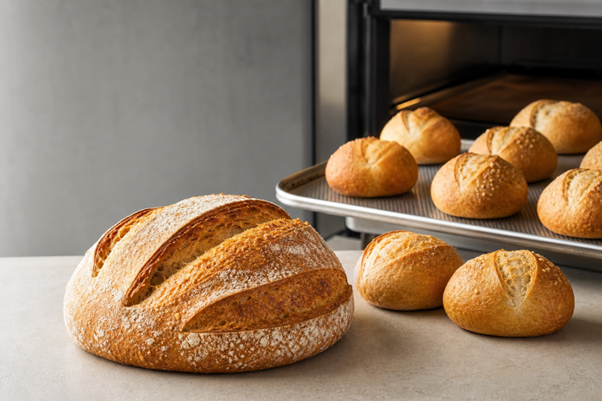
Partially baked formats can allow smaller, more frequent runs instead of committing to a full day’s supply before the first rush. This is especially relevant as artisan bread trends continue to expand into more foodservice formats, including products that balance convenience with a premium presentation.
Bake-off programs may also support consistency across shifts and locations. A trained employee can load a measured batch, set a timer, and complete a simple quality check without needing advanced dough-handling skills. Those benefits only hold up when the operation manages freezer inventory, production timing, and oven performance with discipline.
4. How To Protect Taste And Texture
Build A Repeatable Finishing Routine
- Store products at the specified temperature and keep packaging sealed until needed.
- Follow thawing or proofing instructions, if required.
- Fully preheat the oven and avoid overcrowding racks or pans.
- Use a timer for every batch, then check crust color, crumb, and warmth before service.
- Record successful settings so every shift can repeat them.
Steam, airflow, pan placement, and calibration can change outcomes. Pale crusts may indicate insufficient heat or bake time. Dry centers can point to overbaking. Tough crusts may require a temperature or timing adjustment, while uneven browning often calls for rack rotation or an oven maintenance check.
5. Ways To Reduce Bread Waste
Track bread sales by hour, not just by day. Use smaller batches during slower periods and build a par sheet that compares expected demand, actual sales, leftovers, and discarded product. Separate ordinary unsold bread from avoidable losses caused by freezer errors, missed bake times, or overproduction.
When food safety rules and product quality permit, suitable day-old bread can become croutons, breadcrumbs, stuffing, toast toppings, or staff meals. The broader supply landscape also continues to evolve, as commercial baking acquisitions and product portfolios show how suppliers are investing across frozen, par-baked, and thaw-and-sell formats.
6. How To Plan Labor And Production
Measure labor per batch rather than relying on assumptions. Include receiving, freezer organization, oven loading, cooling, display setup, cleanup, and closing counts. A bake-off schedule should fit around prep and service tasks, not compete with them.
Assign clear ownership for freezer checks, labels, oven loading, and waste counts. Create a short visual guide with batch size, rack position, temperature, timing, and quality standards. Cross-train at least two people for each key task so the program remains steady during callouts, turnover, and peak periods.
7. Equipment And Storage Checks
Before changing formats, review freezer capacity, rack space, oven throughput, and ventilation. Confirm that door seals, thermometers, timers, and heating patterns are reliable. Keep frozen, thawing, and finished products clearly organized, and use first-in, first-out rotation to prevent older inventory from being overlooked.
8. Matching Bread Formats To Menu Needs
Choose bread based on what it must do. A sandwich roll needs enough structure for fillings and sauces. A table basket may need a dramatic crust and shareable appearance. Toast, plated entrées, delivery items, and grab-and-go displays each create different needs for slicing, holding, portion control, and visual appeal. Test products during a busy service, not only during a quiet sample bake.
9. A Simple Evaluation Scorecard
- Quality: Does the bread meet expectations for flavor, aroma, crust, and crumb?
- Labor: How many staff hours are required from storage through service?
- Waste: How much product is discarded each day or week?
- Speed: Can fresh batches be produced during peak demand?
- Consistency: Do different employees achieve similar results?
- Total Cost: Have labor, energy, storage, and waste been included?
- Guest Fit: Does the bread support the menu and the intended experience?
10. Final Thoughts
There is no single right bread system for every foodservice operation. The best choice reflects menu goals, staffing, equipment, demand patterns, and quality standards. By testing products carefully, baking in measured batches, training employees clearly, and reviewing waste every week, teams can serve bread that feels genuinely fresh while keeping daily work practical.
