

Heavy rain can reveal plumbing weaknesses that have gone unnoticed for months or years. A storm may cause problems well beyond a roof leak, including slow drains, sewer odors, basement water, sump pump trouble, and saturated soil around buried pipes. Homeowners who want a general starting point for evaluating storm-related plumbing concerns can visit website for additional information.
The key is to inspect safely and act early. Rain does not have to enter through a window or foundation crack to affect the plumbing system. A sudden increase in groundwater, overloaded public infrastructure, or a damaged private sewer line can all create trouble inside the home.
Why Heavy Rain Affects Home Plumbing
Intense rainfall adds water to streets, yards, storm drains, and underground soil. While stormwater systems are designed to carry runoff from roads and roofs, sanitary sewer systems carry wastewater from toilets, sinks, showers, and appliances. The two systems are meant to remain separate, but rain can still affect sewer performance when water enters damaged pipes or overloaded public lines.
For example, indoor drains may have worked normally before the storm, yet a saturated yard can shift soil or place extra pressure around an aging underground sewer lateral. Poor grading, cracked joints, root intrusion, and blocked outdoor drains may allow a manageable problem to become more noticeable during a downpour.
How Rain Can Lead To Sewer Backups
Heavy rain can contribute to inflow and infiltration, which occur when water enters a sewer system through cracks, loose connections, damaged manholes, or improper connections from sump pumps and downspouts. As rainwater enters sanitary sewer pipes through small cracks and connections, the added volume can slow wastewater movement and increase the risk of backups in vulnerable areas.
Risk may be greater for low-lying homes, homes with basement bathrooms, and properties served by older sewer lines. When a public main or private lateral is near capacity, wastewater can move slowly or reverse toward the lowest available drain. A floor drain, shower, laundry standpipe, or basement toilet may show the first warning signs.
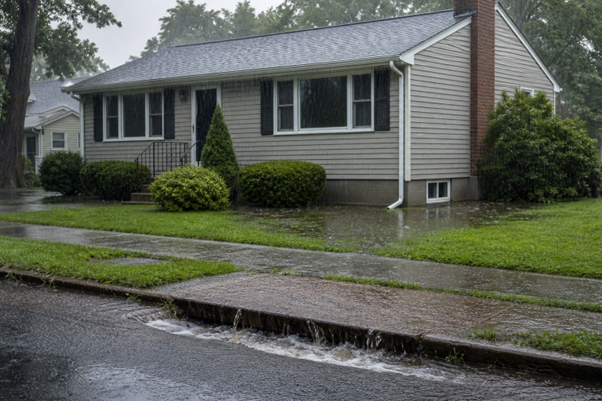
Warning Signs To Watch For After a Storm
One slow fixture does not always mean a major sewer problem. However, several symptoms appearing together, especially during or soon after rain, deserve quick attention.
- Gurgling sounds from toilets, tubs, or sinks
- Slow drains on the lowest level of the home
- Sewer-like odors near floor drains or showers
- Water rising from a basement drain
- Multiple fixtures are backing up at the same time
- Wet spots, soft soil, or unusual puddles near buried pipes
- Sudden changes in water pressure
- New moisture around toilets, tubs, water heaters, or utility rooms
Brown, gray, or foul-smelling water should be treated as potentially contaminated. Keep people and pets away from it, avoid direct contact, and do not assume it is ordinary rainwater.
Outdoor Plumbing Checks
After it is safe to go outside, inspect the areas that move water away from the house. Focus on drainage paths, visible plumbing access points, and signs that soil or runoff has changed around the foundation.
Outdoor Inspection Steps
- Remove leaves, mud, and debris from visible yard-drain covers.
- Confirm downspouts discharge well away from the foundation.
- Look for standing water near sewer cleanout caps or foundation walls.
- Check that the sump pump discharge line is not blocked, crushed, or frozen.
- Watch for washed-out soil, sinkholes, or unusually soft ground above buried pipes.
- Note whether water repeatedly flows toward the home instead of away from it.
Do not remove a cleanout cap if sewage may be backing up or the line could be under pressure. Opening it can suddenly release wastewater and create a larger cleanup problem.
Indoor Plumbing Checks
Start indoors at the lowest point of the home. Basements, crawl spaces, laundry rooms, and ground-level bathrooms often reveal storm-related trouble before upper-floor fixtures. Look under sinks, around toilets, beside water heaters, and near floor drains for water, staining, warped flooring, or damp drywall.
Musty odors can signal hidden moisture even when standing water is gone. If a room is flooded and electrical outlets, appliances, or extension cords may be wet, do not enter until the electrical hazard has been addressed. Never use electrical devices while standing in water.
Safe Steps Homeowners Can Take
When multiple fixtures back up, reduce the amount of water entering the drainage system. Stop running dishwashers and washing machines, avoid flushing toilets when possible, and keep showers and sinks unused until the cause is clearer. Chemical drain cleaners are not a reliable solution for a sewer backup and can create hazards when mixed with other products or exposed to wastewater.
- Take photos and notes documenting visible damage and the timing of the storm.
- Move dry belongings away from affected areas when it is safe to do so.
- Dry clean, accessible areas promptly to limit moisture damage.
- Contact the local utility if streets, manholes, or nearby properties are also flooding.
- Keep children and pets away from suspected sewage-contaminated water.
When Professional Help May Be Needed
A deeper evaluation is often appropriate when sewage enters the home, several fixtures back up, drainage problems return after every major storm, or wet areas develop near the sewer line. Repeated do-it-yourself attempts may temporarily move a blockage without identifying damage further underground.
An inspection may include a sewer camera, drain flow testing, leak detection, or a sump pump assessment. These methods can help identify root intrusion, cracked pipe sections, poor drainage, failing connections, or equipment that cannot keep up with groundwater.
Ways To Reduce Future Rain Damage
Regular maintenance can lower the chance that a heavy storm becomes a plumbing emergency. In some cases, the solution may involve cleaning and repairs. In others, homeowners may need improved grading, better drainage routing, a backwater valve, or repairs to an aging sewer lateral. Recent flooding in New York City showed how intense rainfall can overwhelm sewer capacity, even where public drainage infrastructure is in place.
Pre-Storm Maintenance Checklist
- Clean gutters, downspouts, and outdoor drains before storm season.
- Test the sump pump and maintain a backup power plan where appropriate.
- Keep the sewer cleanout visible and accessible.
- Address slow drains and dripping fixtures before they worsen.
- Watch for tree roots near older underground sewer lines.
- Ask the local utility about applicable backflow prevention requirements.
- Review flood and water-damage insurance coverage before severe weather arrives.
Final Thoughts
Heavy rain often exposes weak points that already existed in a home’s plumbing or drainage system. Slow drains, sewer odors, damp floors, and yard pooling deserve attention, particularly when they happen repeatedly. A careful post-storm inspection can help homeowners protect their space, document damage, and decide when a more thorough plumbing evaluation is the sensible next step.
