

Australians are spending over $50 billion on home renovations this year, with bathroom and kitchen projects accounting for more than 60 percent of that total. With a standard bathroom upgrade now costing between $15,000 and $35,000, homeowners want every design choice to count. Recent industry data shows that 71 percent of renovators are ranking personal style and practical function ahead of price. Furthermore, a heavy focus on wellness is taking over residential design, as 67 percent of local renovators prioritise spa-like features. A central element of this relaxing aesthetic is the vanity area, making your choice of washbasin a crucial decision that sets the tone for the entire room. Whether you are building from scratch or updating tired fixtures, getting this core element right makes all the difference.
Evaluating Your Bathroom Layout and Plumbing
Before you start looking at specific shapes and finishes, it is essential to assess your available floor plan and existing plumbing structure. The annual Housing Industry Association Kitchens and Bathrooms Report highlights an ongoing trend where renovators are keeping their bathroom footprints the same size or smaller. Instead of expanding the square footage, they are choosing to invest in premium fixtures to elevate the daily experience. If you are renovating a compact space, floating wall-hung basins and vanities are heavily favoured in contemporary Australian apartments for their ability to free up floor space and create the optical illusion of a larger room.
When you transition to a wall-hung style, your plumbing requirements will inevitably change. It is critical to plan for concealed pipework early in the project. If you need guidance on structural considerations, it helps to review comprehensive resources on designing a dream bathroom to ensure you do not ignore the critical infrastructure that sits behind your newly painted walls.
Comparing Popular Basin Styles and Materials
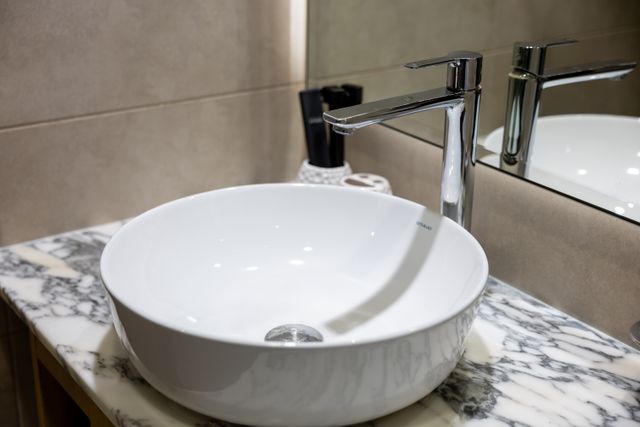
Australian interior designers in 2026 are heavily leaning into biomorphic shapes. Organically curved, pill-shaped, and softly rounded profiles are replacing sharp architectural lines to create a more relaxed, natural environment. As you start browsing online catalogues to search for Bathroom Basins for Sale, you will notice a huge variety of mounting options. Above-counter vessels make a striking design statement, while under-mount styles offer a seamless benchtop that is incredibly easy to wipe down.
Beyond the shape of the bowl, selecting the right material is vital for longevity. Designers are increasingly pairing smooth basin surfaces with textured materials like fluted glass, brushed-metal tapware, or locally sourced Australian hardwoods such as Tasmanian Oak to create a layered aesthetic. When evaluating material durability, consider these popular options:
- High-quality porcelain ceramic: These traditional fixtures are fired at temperatures exceeding 1250 degrees Celsius to achieve a Mohs hardness rating of 6. This rigorous process makes them highly resistant to daily wear and metal scratches.
- Porcelain-enamelled steel: This modern material features a completely non-porous, fully recyclable surface. It inherently resists UV damage, household chemicals, and bacterial growth while maintaining a timeless gloss finish.
- Natural stone: While beautiful and earthy, natural stone is highly porous and requires periodic sealing. In contrast, properly glazed ceramic and enamelled steel offer a low-maintenance, stain-resistant solution that is ideal for high-traffic family homes.
Selecting Tapware and Maximising Water Efficiency
Once you have selected the perfect washbasin, you need to pair it with appropriate tapware. The height and spout reach of your taps must align perfectly with your basin to prevent splashing and ensure comfortable handwashing. Tall vessel basins typically require extended tower mixers or wall-mounted taps, whereas standard inset designs work perfectly with traditional bench-mounted mixers.
Functionality goes beyond mere ergonomics. Water conservation remains a massive priority for modern Australian households. When pairing your new fixture with tapware, always check the Water Efficiency Labelling and Standards rating. Choosing a high-efficiency product makes a dramatic environmental and financial difference. In fact, installing low-flow aerated taps can reduce your tap water use from a standard 15 to 18 litres per minute down to as little as 2 litres per minute by cleverly mixing air into the water stream.
Selecting the right fixture involves a careful balance of spatial planning, material durability, and water efficiency. By taking the time to understand your plumbing constraints and exploring the latest organic shapes, you can transform a simple functional necessity into a stunning design focal point that adds lasting value to your home.
