

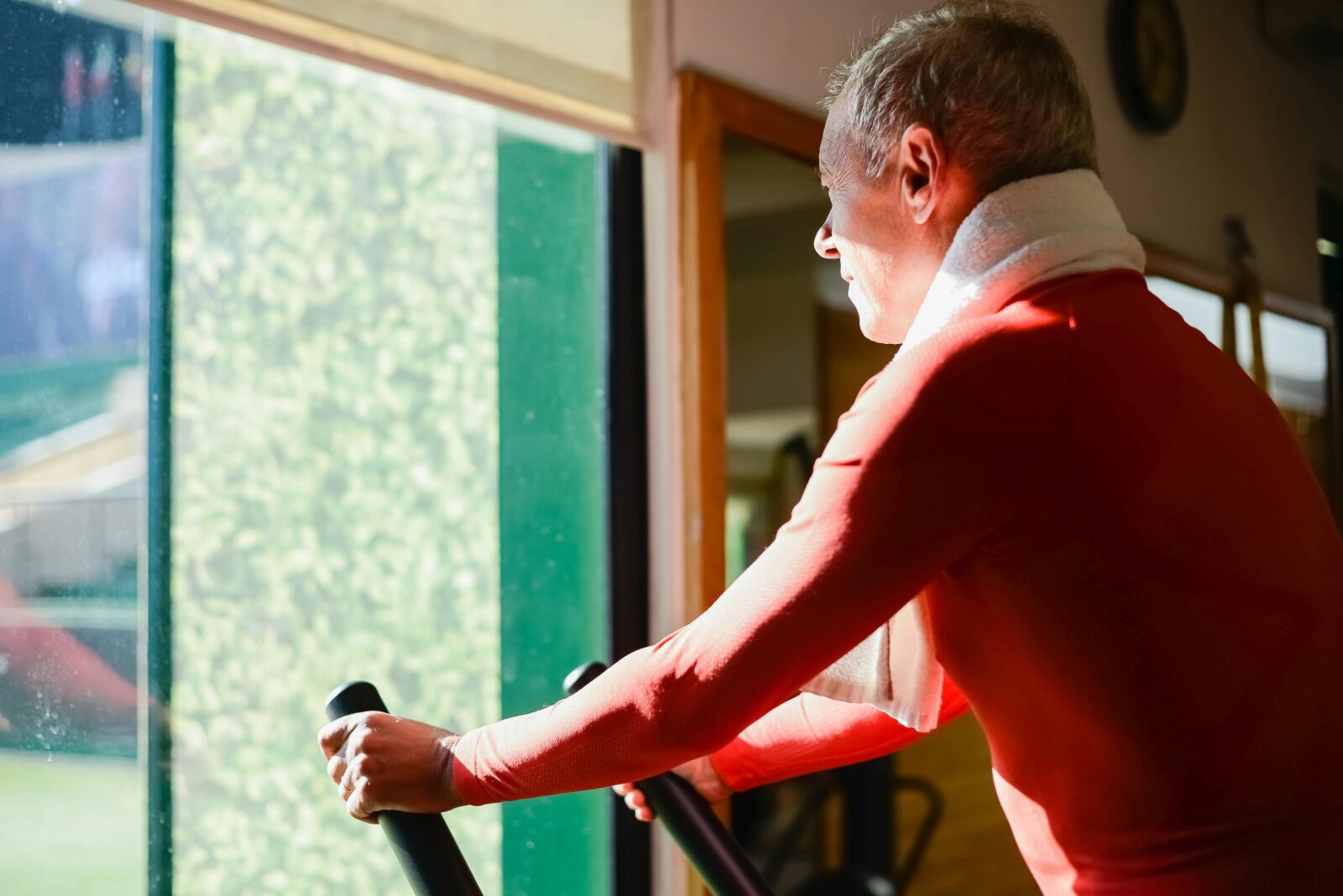
How to Train at Home Without Ending Up in ER?
Exercise bikes are some of the safest cardio equipment you can own. However…When you setup incorrectly, use poor form, and overdo it you can seriously hurt yourself.
The good news?
The majority of exercise bike injuries can be 100% avoided. Make these simple safety changes to keep your knees, back and shoulders healthy long-term.
Let’s jump in!
Here’s what’s inside:
- Why Exercise Bike Safety Actually Matters
- Setting Up Your Bike The Right Way
- Riding Form That Protects Your Body
- Smart Usage Habits To Avoid Injury
Why Exercise Bike Safety Actually Matters
A lot of people assume stationary bikes are completely risk-free.
They’re not.
Research utilizing emergency department injury data showed there were 754 exercise bike injuries recorded from 2015-2019. The mean age of riders injured during this time was 57.4 years old.
And it gets worse…
In another study, researchers discovered that stationary bikes led to 1,630 ER visits tying it with one of the most common home gym products to cause injuries.
Why are injuries occurring on a stationary machine?
Three main reasons:
- Poor bike setup
- Bad riding form
- Pushing too hard, too fast
The truly frightening thing? Of those 165 injuries in the study where the cyclist fell into or off of the bike, strains to the lower back, knee, and lower leg were among the most common musculoskeletal injuries.
And that’s why ergonomics is important. Cycling — outdoors or on an exercise bike — is one of the best low-impact cardio exercises you can do. They’re easy on your joints and help build leg strength, plus they give you a fantastic cardio workout with far less pounding than running. However, if you aren’t cycling properly, you could be doing more harm than good.
Setting Up Your Bike The Right Way
This is where 90% of people mess up.
Poor bike fit is the NUMBER ONE reason cyclists experience knee, back, and hip pain. Here’s the solution…take 5 minutes to properly adjust your bike BEFORE you ride.
Get Your Seat Height Right
Get this wrong and you’ll wreck your knees within weeks.
Here’s the easy way to set it:
- Level your seat to your hip bone when standing next to your bike
- Sit on the saddle and place your heel on the pedal
- Pedal backwards — your leg should be fully extended at the bottom
- When pressing the pedal down with the ball of your foot your knee should be slightly bent
That little angle is the sweet spot. Raise it too high and you will rock back and forth. Lower it too much and you will scrape your kneecap every time you paddle.
Set The Seat Forward/Backward Position
Most people totally ignore this setting.
However, it’s crucial for knee alignment. When sitting on the bike, position your feet at the 3 and 9 positions. Your forward knee should be right above the center of the pedal. Not forward, not behind.
Your knee is forward of the pedal if you feel huge amounts of pressure on it. Push your seat backward until it lines up.
Adjust Your Handlebars
Handlebar height is more about comfort — but it still matters.
A beginner’s handlebars should be level with the seat or slightly higher. This relieves stress on your lower back and shoulders.
A comfortable rider is a safe rider.
Riding Form That Protects Your Body
Bike is set up… Time to ride it properly.
Keep Your Back Neutral
Try not to round forward at your shoulders or lower back. Imagine a straight line going from your hips, up through your spine and to the top of your head. Keep your abs slightly engaged throughout.
Don’t Lock Your Knees Or Elbows
Locked joints transfer impact straight into your bones and ligaments.
Maintain a slight bend in your elbows at all times. Also, never hyperextend your knees at the bottom of your pedal stroke – that is one of the quickest ways to cause knee pain.
Pedal In Smooth Circles
The biggest mistake new riders make? Just stomping down on the pedals.
Try this instead:
- Push down on the way down
- Pull back at the bottom (like scraping mud off your shoe)
- Pull up on the way up
- Push forward at the top
This creates smooth, circular pedalling that uses your whole leg, not just your quads.
Watch Your Cadence
Cadence = pedal strokes per minute (RPM).
Try sticking between 80-100 RPM for most exercisers. Spinning too slow with too much resistance creates huge strain on your knees. Spinning too fast creates poor form.
Smart Usage Habits To Avoid Injury
Perfect form. Perfect setup… You can still hurt yourself if you train poorly.
Always Warm Up
Cold muscles are prone to injury. Pedal for 5 minutes at an easy pace before you increase the resistance.
Build Up Slowly
Unfortunately most injuries from exercise bike accidents occur as a result of overdoing it.
Doctors recorded this. There were 23 cases of rhabdomyolysis related to stationary bike exercise, 82.6% of which were attributed to a spinning class. Rhabdo is when your muscles breakdown because they were overworked. It can lead to kidney failure.
Ouch.
For beginners, keep workouts between 15-20 minutes. Increase by 5 minutes each week. Allow your body to adjust.
Listen To Your Body
Pain is feedback. Sharp pain or numbness in your knee is telling you that something is wrong with your setup/form.
Don’t push through it. Stop, adjust, and try again.
Avoid These Common Mistakes
Even experienced riders make these errors:
- Too much resistance — breaks your knees. Decrease the resistance and pedal faster.
- White-knuckling the handlebars — causes neck and shoulder pain. Hands should rest lightly.
- Skipping the cool down — Cooling down with 5 minutes of easy pedalling allows your body to recover.
- Wrong shoes — flip-flops can slip off the pedals. Wear proper trainers.
Bringing It All Together
Exercise bikes are one of the best fitness investments you can make.
But the only way to get the benefits is to ride safely. To recap:
- Set up your bike properly — seat height, position, handlebars
- Maintain a neutral back, soft joints, and smooth pedal strokes
- Warm up, build up gradually, and listen to your body
- Avoid common mistakes like too much resistance and bad grip
Master these fundamentals and you can ride for a lifetime. Now hop on that bike and go ride!
