

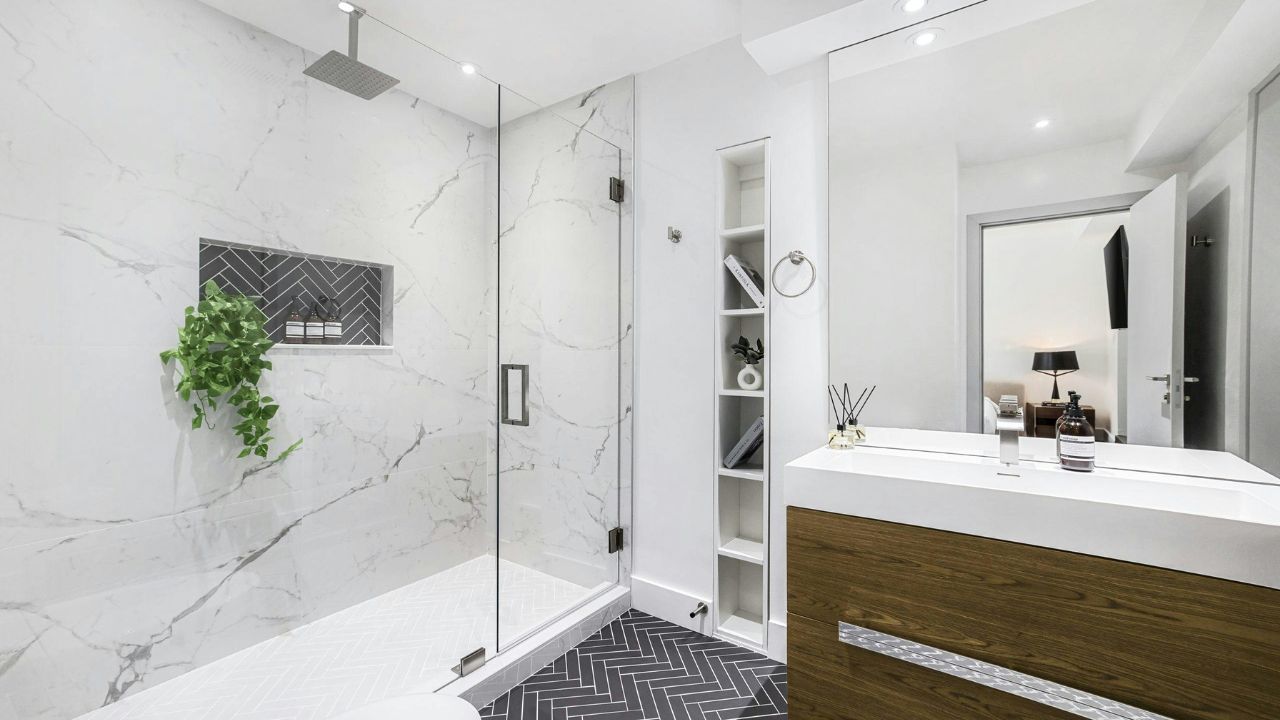
Dream bathrooms make magazine covers look good.
Standalone soakers. Rain showerheads. Heated floors and wall-to-wall subway tiles.
But here’s the problem…
Unless you’re careful, your vision for the perfect bathroom can quickly turn into a plumbing nightmare. Most homeowners get wrapped up in how the room looks and completely forget about what’s making it function properly. The inside of those walls matter far more than your faucet finish.
Here’s why…
A bathroom redesign without regard for the plumbing behind the scenes is one of the costliest mistakes you’ll make as a homeowner. Fixing burst pipes discovered behind gorgeous new tiles will always cost more than if you’d taken care of them ahead of time.
Bathroom remodels should always start with the plumbing, not Pinterest.
If you’re planning any sort of bathroom remodel in 2024, getting existing pipe conditions assessed before you demo is easily the most important first step. Waiting until after the fact is how homeowners spend extra thousands on water damage, structural repairs, and replaced finishes.
What you’ll discover:
- Why you should care about what’s inside your bathroom walls
- Burst pipe repair costs — what no one tells you
- The signs your pipes need work before starting a remodel
- Tips for designing around your plumbing
- The correct order for bathroom renovations – always!
Why Walls Matter More Than Tile
Kitchen renovations are a complex puzzle.
Apart from everything you see, every sink, countertop, appliance and backsplash comes equipped with an equally important network of water supply lines, drain pipes, and shut-off valves. They determine whether or not your renovation stands the test of time.
Which most homeowners don’t consider until it’s too late…
Pipe failures are more common than you think. Every year 250,000 homes experience burst pipes across the United States, making water damage from pipes one of the top insurance claims homeowners file. And the average burst pipe claim is $11,650. Ouch.
Factor in structural damage, replaced finishes and missed renovation time? Repairing pipes detected after the walls are closed in will often exceed $5,000 to $15,000.
If there’s already an issue with your pipes that’s going to get worse once you start renovating, sealing it up inside tile is just delaying the inevitable.
And that inevitable is costly. A pre-inspection can help you avoid it.
Prevention is always preferable. Addressing pipe health before the renovation begins is a smart way to stay ahead of potential problems.
Busting into those fresh bathroom walls to replace pipes is not.
Burst Pipe Repair: What it Really Costs
Okay. Here’s something that might cause a little sticker shock.
Pipe repair on its own can cost anywhere between $400 and $2,000. But that isn’t where the costs end. Once water begins seeping into cabinetry, walls and flooring, your final bill skyrockets. Expect to spend at least $5,000 to $15,000 when restorative repairs are accounted for.
What’s worse…
Repair jobs come with an unwanted trip into your bathroom’s walls. And did you know nearly 80% of pipe repair labor goes to..well…you guessed it. Labor? Pipes that are easily accessible behind cabinets are cheap. Pipes located behind tiled walls need the tile pulled first.
If you caught your pipes before the renovation started, repairing or replacing them is as simple as opening the wall up. Addressing it after? Now you have to demo all the finishes too.
Basically, it costs twice as much.
This point can’t be stressed enough. Identify pipe problems before renovating or you could be buying a whole new bathroom.
Warning Signs Your Pipes Need Work
Wondering if you should even bother with a plumbing inspection?
Take a look at these symptoms. If any apply to you, it’s a great time to get ahead of the problem.
- Discoloured water coming out of faucets. Yellow or brown usually means corrosion inside the pipes.
- Loss of water pressure. Has it been getting worse over years? Suddenly? Both?
- Water stains on your wall or ceiling closest to the bathroom.
- Musty odors without an apparent cause. Hidden leaks leave dank smells behind.
- Your home was built before the 80s. Plumbing just isn’t built to last like it used to.
No insulation.
That’s not to say pipes need replacing every time a renovation is planned. But if you spot one or more of these issues, now is a great time to get them looked at.
Letting your plumber peek behind the walls before demo can help you identify potential problems before they become extremely expensive problems.
Tips for Designing Around Your Plumbing
Hold onto your hammers.
Here’s the fun part. Designing around existing pipes may sound obvious, but did you know the way your pipes run limits what renovations can be done?
Moving a toilet 6″ can change your pipe layout entirely. Or installing that dream shower you’ve been eyeing isn’t as simple as the DIY video makes it seem.
Splish. Splash.
Adjusting your bathroom layout without considering how your current plumbing aligns means extra labour. Sometimes even extra renovations.
Here’s how you can avoid it:
Inspect first, design later. That means having the inside of your walls looked at before finalizing your layout.
Work with what you have. Plans that don’t require moving or adjusting your plumbing keep project quotes down and streamline construction.
Only change locations if you absolutely have to.
Updating to efficient fixtures without moving water lines? Sure.
Trading your outdated tub/shower combo for a sleek new walk-in shower that still falls in the same wet wall area? YES.
Changing your showerhead to a rainfall style that attaches to your current overhead shower outlet? You betcha.
These are just a few clever examples of how changing finishes doesn’t have to mean ripping your walls open to rearrange pipes.
Doing things the easy way won’t sacrifice your design.
According to recent research from Boris Mechanical, plumbing upgrades were the number one home improvement expense in 2024, with over one in four homeowners investing in new pipes as part of their remodel.
They’re definitely not going out of style.
Correct Order for Bathroom Renovations
Renovating out of order is like rearranging your kitchen alphabetically.
Don’t do it.
Sure, it’s possible. But you’ll spend more time fixing your mistakes than you would’ve simply doing things how they’re meant to be done.
Bathroom renovations are no different. Here’s how to keep things simple:
- Inspection – The pipe health comes first and foremost.
- Design – Layout your bathroom how you want but keep the pipes in mind.
- Rough-in – Any replacements or relocation happen here.
- Waterproof – Again, wet rooms need to be waterproof. Duh.
- Tiles/Walls – Thank goodness, the beautifying can begin!
- Fixtures & Fittings – Last to go in, these need to be added after everything is tiled and waterproofed.
Skipping step one is how homeowners are forced to shell out thousands for repairs they never planned on… like burst pipe repair.
Planning on tackling that remodel yourself?
Your rough-in phase will look different than hiring a contractor. Either way, familiarising yourself with the correct order helps renovators of all kinds avoid costly errors.
Bathroom Design? Consider the Plumbing
Dream bathrooms don’t have to be a nightmare.
Flip through pretty magazines all you want. Just don’t forget about the bones that make it function when you’re plotting your layouts.
Pipe inspections save homeowners money. Not only that but designing around what you already have keeps project quotes lower and saves you from doing extra work.
Balance the two together and you’ve got yourself a winning bathroom renovation that will look good for years to come.
